
Creating a Fertile Mindset: How Your Thoughts Can Support Conception
Struggling to conceive can feel isolating, frustrating, and emotionally draining. Many individuals and couples describe the experience as a rollercoaster of hope, disappointment, and uncertainty. While medical treatments and lifestyle changes are often the focus, one vital element is often overlooked: the power of your mindset.
Emerging research and real-world success stories show that cultivating a positive outlook, practicing mindfulness, and managing stress can significantly improve fertility outcomes. In this blog, we will explore how your thoughts and emotions influence your fertility journey and share practical tools to help you build resilience, reduce stress, and nurture a fertile mindset.
This article will cover:
• The connection between the mind and body in fertility
• How stress and thought patterns influence conception
• Simple mindfulness practices to reduce stress
• Nutrition and lifestyle strategies to support mental wellness
• The importance of community and support
• How to take control of your fertility journey with practical steps

Understanding the Mind-Body Connection in Fertility
Your reproductive system does not function in isolation. It is influenced by your nervous system, stress response, and emotional state. When stress hormones such as cortisol rise, they can disrupt the hypothalamic-pituitary-ovarian (HPO) axis, which regulates ovulation and menstrual cycles.
Mind-body interventions have been shown to reduce stress and improve fertility outcomes. For example, a systematic review by Rooney and Domar (2018) found that stress reduction programs improved pregnancy rates in women undergoing infertility treatment. More recent studies confirm that interventions such as mindfulness and yoga are associated with better emotional well-being and higher rates of conception (Rooney, K. L., & Domar, A. D. (2018). The relationship between stress and infertility. Dialogues in Clinical Neuroscience, 20(1), 41–47).
The Role of Thoughts and Stress in Conception
Chronic stress does more than impact mood. It can alter hormonal balance, reduce progesterone, disrupt ovulation, and interfere with implantation. Research has shown that women experiencing higher levels of stress biomarkers may have lower chances of conception (C.D. Lynch , R. Sundaram , J.M. Maisog , A.M. Sweeney , G.M. Buck Louis 2014).
Negative thought patterns and persistent worry can also perpetuate this stress cycle. By shifting toward a mindset of resilience and optimism, patients can buffer the physiological effects of stress and improve their overall reproductive health (Katja Hämmerli 1, Hansjörg Znoj, Jürgen Barth 2009)
Mindfulness Practices to Support Fertility
Mindfulness involves paying attention to the present moment without judgment. By calming the nervous system, mindfulness helps regulate stress hormones and restore balance.
Practical techniques include:
• Daily meditation: Even 10 minutes has been shown to lower stress and improve mood (Yi-Yuan Tang, Britta K. Hölzel & Michael I. Posner (2015).
• Conscious Work: Personalized sessions with Dr. Lorne Brown using clinical hypnosis, guided imagery, EFT, visualization, breathing techniques, and other evidence-informed mind-body tools to support nervous system regulation and emotional resilience during fertility treatment.
• Breathwork: Simple breathing exercises can reduce cortisol in real time.
• Guided imagery: Fertility-focused meditations, such as Circle & Bloom or Acubalance’s guided practices, support relaxation and visualization.
• Yoga and gentle movement: Regular practice improves both stress resilience and reproductive outcomes

Nutrition and Lifestyle for a Fertile Mindset
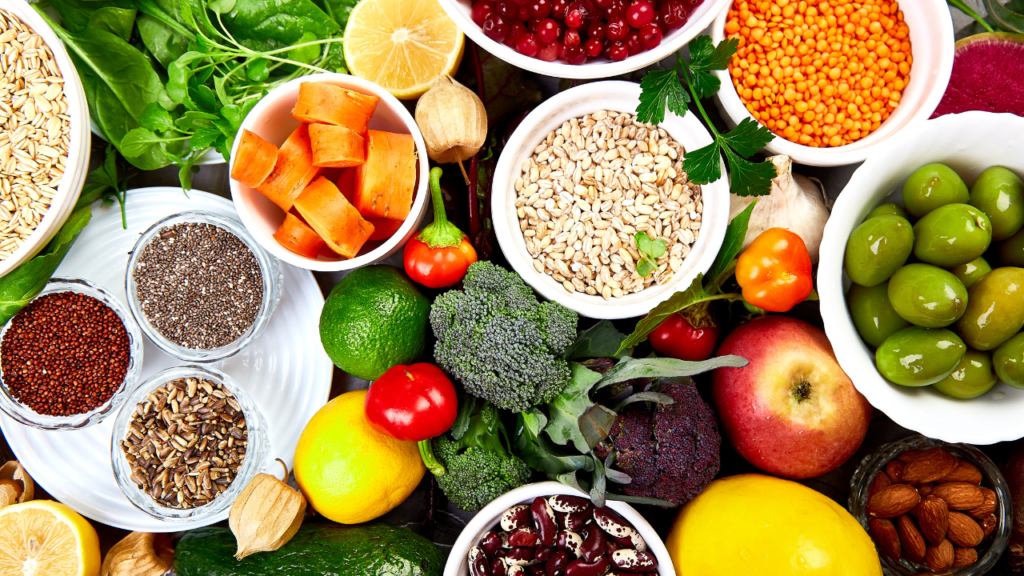
Nutrition directly influences mood and fertility. Deficiencies in Vitamin D and B vitamins have been linked to depression and fatigue, both of which can worsen stress during the fertility journey.
Key strategies include:
• Balanced meals to stabilize blood sugar and reduce irritability.
• Omega-3 fatty acids from fish, walnuts, or flaxseed to reduce inflammation and support brain health.
• Vitamin D and B12 testing to correct deficiencies associated with mood and immune dysregulation (Aghajafari et al., 2019; Hajhashemy et al., 2022).
• Regular physical activity to release endorphins and improve sleep quality.
For more detail, download Acubalance’s Fertility Diet Guide.
Building Community and Finding Support
Fertility struggles often feel isolating, but community support makes a difference. Studies show that women who participate in support groups or counseling experience lower stress and higher pregnancy rates compared to those who do not (Hammerli et al., 2020).
At Acubalance, our integrative team provides not only medical and naturopathic care but also a compassionate space where emotional support is prioritized alongside physical treatments.
Taking Control of Your Fertility Journey
The path to parenthood can feel unpredictable, but there are steps you can take to regain control:
• Track your cycle and health data to feel more informed.
• Incorporate acupuncture, nutrition, and mindfulness into your care plan.
• Build a supportive network of professionals and peers.
• Focus on what you can influence, such as stress management, lifestyle, and mindset, rather than what you cannot.
Final Thoughts
Your mindset matters as much as your physical health when it comes to fertility. By embracing mindfulness, supporting your body with the right nutrition, and surrounding yourself with community, you create an environment where both you and your future baby can thrive.
Ready to take the next step? Explore Acubalance’s free wellness sessions and discover how our integrative approach can support your fertility mindset and overall health.
For more detail, download Acubalance’s Fertility Diet Guide
604. 678. 8600
References
Aghajafari, F., Letourneau, N., Mahinpey, N., Cosic, N., & Giesbrecht, G. (2019). Vitamin D deficiency and antenatal and postpartum depression: A systematic review. Nutrients, 10(4), 478.
Tristan St-Laurent 1,2ORCID and Riadh Hammami. (2022). Vitamin B12, folate, and infertility: A systematic review and meta-analysis. Nutrients, 14(12), 2523. The Untapped Potential of Ginsenosides and American Ginseng Berry in Promoting Mental Health via the Gut–Brain Axis
(Katja Hämmerli 1, Hansjörg Znoj, Jürgen Barth 2009) The efficacy of psychological interventions for infertility patients: A meta-analysis examining mental health and pregnancy rate. Human Reproduction Update, 26(1), 96–111)
Peter N. Schlegel, M.D.a ∙ Mark Sigman, M.D.b ∙ Barbara Collurac ∙ Christopher J. De Jonge, Ph.D., H.C.L.D.(A.B.B).d ∙ Michael L. Eisenberg, M.D.e ∙ Dolores J. Lamb, Ph.D., H.C.L.D.(A.B.B).f ∙ John P. Mulhall, M.D.g ∙ Craig Niederberger, M.D., F.A.C.S.h ∙ Jay I. Sandlow, M.D.i ∙ Rebecca Z. Sokol, M.D., M.P.H.j ∙ Steven D. Spandorfer, M.D.f ∙ Cigdem Tanrikut, M.D., F.A.C.S.k ∙ Jonathan R. Treadwell, Ph.D.l ∙ Jeffrey T. Oristaglio, Ph.D.l ∙ Armand Zini, M.D.m (2021). Preconception stress biomarkers and time to pregnancy: A prospective cohort study. Fertility and Sterility, 115(4), 978–986 .Diagnosis and treatment of infertility in men: AUA/ASRM guideline part I
Rooney, K. L., & Domar, A. D. (2018). The relationship between stress and infertility. Dialogues in Clinical Neuroscience, 20 (1), 41–47.The relationship between stress and infertility
Yi-Yuan Tang, Britta K. Hölzel & Michael I. Posner (2015). The neuroscience of mindfulness meditation. Nature Reviews Neuroscience, 16(4), 213–225.