How to Improve Egg Quality Naturally and Before IVF
An integrative, evidence-informed approach to help optimize egg quality — naturally and before IVF.
- Overview
- Our Method
- What Affects Egg Quality
- Treatments
- FAQ
- Next Steps
- Implantation & FET
- IVF Success
Overview
Yes, egg quality can often improve — but the more important question is whether it can improve enough to meaningfully improve your chances of conception.
Egg quality is influenced by much more than age alone. While age matters, egg quality is also shaped by mitochondrial function, blood flow, inflammation, oxidative stress, metabolic health, hormonal balance, nutrition, microbiome health, and nervous system regulation.
At Acubalance, we understand poor egg quality is often not just an egg problem. More often, it reflects an issue with the cellular and follicular environment in which the egg develops. Because eggs begin maturing many months before ovulation — with the final 3 to 4 months being especially important — improving the environment around the developing follicle that contains the egg may help optimize egg quality naturally, before IVF.
This means supporting the biological systems that matter most for fertility: healthy mitochondrial function for energy production, good blood flow to the ovaries, balanced hormones, regulated inflammation, metabolic health, adequate nutrition, microbiome balance, and a resilient nervous system.
At Acubalance, we use an integrative approach called the Acubalance Fertility Optimization Method, combining personalized nutrition and lifestyle guidance, fertility acupuncture, fertility-focused photobiomodulation (laser therapy), Chinese herbal medicine, targeted supplements, nutritional IV therapy, and nervous system regulation to help optimize egg quality, improve reproductive health, and support your best chances of a healthy pregnancy and baby.
The Acubalance Fertility Optimization Method
At Acubalance, we rarely rely on just one therapy to improve egg quality. Egg quality is influenced by many biological systems at once — mitochondrial function, blood flow, inflammation, metabolic health, hormones, microbiome balance, nutrient status, and nervous system regulation — and often we do not know which pathway is the primary bottleneck.
Before layering advanced therapies, we help patients build the non-negotiable foundational pillars through personalized guidance in nutrition, movement, sleep, recovery, and stress regulation. No single intervention can fully compensate for poor foundations, but strong foundations combined with targeted therapies can meaningfully improve fertility potential.
At Acubalance, we use an integrative approach called the Acubalance Fertility Optimization Method, combining personalized nutrition and lifestyle guidance, fertility acupuncture, fertility-focused photobiomodulation (laser therapy), Chinese herbal medicine, targeted supplements, nutritional IV therapy, and nervous system regulation to help optimize egg quality, improve reproductive health, and support your best chances of a healthy pregnancy and baby.

What Affects Egg Quality
What Does Good Egg Quality Actually Mean?
Good egg quality begins with a healthy follicular environment — the internal environment in which the egg develops and matures. Within that environment, a high-quality egg has the chromosomal integrity and healthy mitochondrial function needed for energy production, fertilization, embryo development, implantation, and ultimately a healthy pregnancy and baby.
One of the most important factors influencing egg quality is mitochondrial function. Mitochondria are often called the energy powerhouses of the cell because they produce ATP, the energy currency needed for virtually every cellular process.
During fertilization, the egg must complete a specialized process called meiosis, where it reduces its 46 chromosomes down to 23 so they can pair with the 23 chromosomes from sperm. This requires a tremendous amount of cellular energy. Think of it like a zipper that needs to separate cleanly right down the middle. If the zipper gets stuck or comes apart unevenly, the two sides no longer line up properly. Similarly, if the egg does not separate its chromosomes correctly, chromosomal errors become more likely.
When mitochondrial function is poor and cellular energy is low, chromosome separation becomes less precise, increasing the risk of chromosomal errors, which can lead to abnormal embryos called aneuploid embryos. These embryos may fail to fertilize, fail to develop into healthy blastocysts, fail to implant, or — if they do implant — may result in early miscarriage or, less commonly, a baby born with a chromosomal condition.
Egg quality also affects what happens after fertilization. Once the egg is fertilized, the embryo must repeatedly divide and grow over the next 5 to 7 days to reach the blastocyst stage — whether that happens naturally in the fallopian tube or in an IVF lab. This process requires significant energy and healthy cellular function.
The egg does not mature alone. It is supported by surrounding follicular cells that help provide nutrients, cellular signals, and mitochondrial support during maturation. These surrounding cells help create the environment that determines how well the egg develops.
At Acubalance, we view egg quality as heavily influenced by the follicular environment. A healthy follicular environment is supported by good blood flow, balanced hormones, regulated inflammation, low oxidative stress, adequate nutrition, a healthy microbiome, healthy mitochondrial function, metabolic health, and a well-regulated nervous system with the resilience to adapt to stress.
What Causes Poor Egg Quality?
If you’ve been told you have poor egg quality, low ovarian reserve, poor embryo quality, or have experienced repeated unsuccessful IVF cycles, you may be wondering what causes poor egg quality.
The short answer is that egg quality is influenced by both root causes — the things we experience in daily life — and biological mechanisms — what those experiences do inside the body and within the developing egg.
Some factors are modifiable, while others are not. We cannot change our chronological age — how many birthdays we’ve had. But biological age — how well our cells, tissues, and systems are aging — may be influenced by lifestyle, environment, stress, inflammation, and overall health.
The egg itself is only part of the story. Over time, the environment in which the follicles (which contain the eggs) grow and mature may become progressively less supportive. When that follicular environment has poor blood flow, inadequate nutrition, hormonal imbalance, excess inflammation, oxidative stress, microbiome imbalance, impaired mitochondrial energy production, or nervous system dysregulation, the egg may not reach its peak fertility potential.
Common root causes of poor egg quality
Aging — Age is one of the strongest predictors of egg quality. Women are born with all the eggs they will ever have, and over time both the follicles and their surrounding environment experience natural wear and tear. As we age, mitochondrial efficiency declines, oxidative stress often rises, and blood flow to the reproductive organs may gradually decrease — reducing the delivery of oxygen, nutrients, hormones, and cellular signals needed to support healthy egg development. Egg quality often begins to gradually decline after age 35, with a more significant decline often seen after age 40.
Chronic stress and nervous system dysregulation — Chronic emotional stress, unresolved trauma, chronic hypervigilance, and prolonged fight-or-flight states may negatively affect fertility. When the nervous system remains in survival mode for too long, stress hormones such as cortisol may disrupt hormonal balance, sleep, blood sugar regulation, digestion, inflammation, and circulation — all of which may affect egg quality.
Nutritional deficiency and poor diet — Eggs require tremendous energy and nutrients to mature properly. Some people under-eat and simply do not consume enough calories, protein, healthy fats, micronutrients, or antioxidants. Others may consume plenty of calories but rely heavily on processed foods that are calorie-dense yet nutrient-poor — leaving the body overfed but undernourished. Both patterns may impair cellular energy production and reproductive health.
Poor sleep and inadequate recovery — Sleep is one of the body’s most important repair and recovery states. During deep sleep, the body supports hormone regulation, mitochondrial recovery, immune balance, cellular repair, and nervous system restoration. Chronic sleep disruption may increase inflammation, oxidative stress, and metabolic dysfunction.
Environmental toxins and endocrine disruptors — Modern life exposes us to plastics, pesticides, pollutants, heavy metals, and other endocrine-disrupting compounds. These exposures may contribute to oxidative stress, inflammation, hormonal imbalance, and accelerated biological aging.
Chronic inflammation — Chronic inflammation can interfere with the healthy follicular environment in which eggs mature. Some researchers refer to long-standing low-grade inflammation as inflammaging — chronic systemic inflammation that accelerates biological aging — which may contribute to premature degenerative changes and premature fertility decline. We often see chronic inflammation in conditions such as PCOS/PMOS, endometriosis, chronic infections, gut dysfunction, autoimmune patterns, and other systemic inflammatory states. In some cases, unexplained infertility, repeated implantation failure, or recurrent miscarriage may have chronic inflammation as part of the underlying picture.
The biological mechanisms behind poor egg quality
Behind those everyday root causes are the biological mechanisms — what those experiences actually do inside the body and within the developing egg:
- Mitochondrial decline and lower ATP production — As mitochondrial function declines, the egg produces less ATP — the energy needed for chromosome separation, fertilization, embryo development, and implantation.
- Oxidative stress — Often described as cellular wear and tear, similar to rust building up inside a machine. Excess oxidative stress may damage mitochondria, DNA, cell membranes, and eggs.
- Hormonal imbalance — Imbalances involving insulin, cortisol, thyroid hormones, estrogen, progesterone, FSH, and LH may impair egg maturation, quality, and ovulation.
- Blood sugar dysregulation and insulin resistance — Poor blood sugar regulation and insulin resistance may increase inflammation, oxidative stress, and hormonal imbalance — all of which can negatively affect egg quality. This is especially relevant in PCOS and metabolic dysfunction.
- Reduced blood flow — Healthy eggs require adequate blood flow to receive oxygen, nutrients, hormones, and signaling molecules. Blood flow to the reproductive organs may gradually decline with age and may also be affected by chronic stress and lack of movement. This is one reason therapies that support healthy blood flow, mitochondrial function, and nervous system regulation may play an important role in fertility optimization.
- Microbiome imbalance — An unhealthy microbiome may influence inflammation, immune balance, hormone regulation, metabolism, and reproductive health.
- Nutrient deficiency at the cellular level — Even when calorie intake appears adequate, cells may still lack the nutrients needed for ATP production, antioxidant defense, DNA repair, and healthy egg development.
- Nervous system dysregulation — A chronically dysregulated nervous system may contribute to poor circulation, hormonal imbalance, inflammatory signaling, reduced adaptability, and lower physiological resilience. From a psychoneuroimmunology perspective, chronic stress and prolonged fight-or-flight activation can influence the nervous, endocrine, and immune systems simultaneously. Because fertility is not controlled by the reproductive system alone, nervous system regulation plays an important role in supporting egg quality, implantation, and overall reproductive health.
At Acubalance, we view declining egg quality not as a single problem, but as a reflection of overall health — what we call fertility resilience, the biological systems that form the foundation of the Acubalance Fertility Optimization Method, including cellular energy, blood flow, inflammation, hormonal balance, microbiome health, metabolic function, and nervous system regulation.
Can Egg Quality Improve?
The short answer is yes, egg quality can often improve — but the more important question is: can it improve enough to meaningfully improve your chances of conception?
At Acubalance, we believe egg quality is not determined by chronological age alone. While chronological age certainly matters, biological age may matter just as much. Biological age reflects how well your cells, tissues, mitochondria, and body systems are functioning.
For example, two women may both be 40 years old chronologically, yet have very different biological fertility potential. One may be functioning more like a biological 50-year-old, while the other functions more like a biological 42-year-old. The woman functioning closer to a biological 42 is still within her reproductive window and capable of conceiving. The woman functioning like a biological 50-year-old may struggle to conceive despite being the same chronological age.
Our goal is to help reduce accelerated biological aging so your biological age functions more in alignment with your chronological age. For someone who is chronologically 40 but functioning more like a biological 50-year-old, our goal is to improve the underlying factors driving accelerated biological aging — inflammation, oxidative stress, mitochondrial dysfunction, metabolic imbalance, poor blood flow, microbiome imbalance, hormonal dysregulation, and chronic stress. By improving these foundational systems, we may help move the body from a biologically aged, subfertile state toward a more biologically resilient and fertile state.
That said, age still matters. There is a biological reproductive window. If someone is already chronologically beyond that window, there may be limits to how much improving cellular health can change fertility outcomes. For example, if a woman is 51, even if we significantly improve her overall health, sleep, metabolism, inflammation, and resilience so she functions like a healthy biological 51-year-old, that does not mean her fertility potential has been restored to the level needed for conception and a healthy pregnancy using her own eggs.
The 100-Day Egg Quality Window
One of the most important concepts in fertility is that the egg you ovulate this month did not fully mature in just the past two weeks.
In humans, folliculogenesis — the full development of an egg from a dormant primordial follicle to ovulation — begins much earlier than most people realize, often roughly 8 to 12 months before ovulation. During this long developmental process, the egg and its surrounding follicular cells undergo critical growth and maturation, including mitochondrial development, granulosa cell proliferation, cellular signaling, and epigenetic programming.
However, the final phase of egg growth and maturation — the phase most influenced by blood flow, hormones, mitochondrial function, metabolic health, inflammation, sleep, stress, and the follicular environment — occurs during roughly the last 60 to 100 days, with the final 85 to 100 days being especially important.
That means the egg retrieved during IVF, or ovulated during a natural cycle, has been influenced by the internal environment you created over the previous year — but especially during the last 3 to 4 months. This creates an important opportunity: what you do today may influence the environment in which your eggs mature over the next 100 days.
This is why many fertility interventions aim to support patients for at least 3 months, and ideally longer. At Acubalance, we often recommend giving yourself at least 12 weeks — and ideally closer to 100 days or more — before an IVF retrieval, egg-freezing cycle, or conception attempt to meaningfully support egg quality.
Nourish the Soil Before You Plant the Seed
At Acubalance, we often use the metaphor: nourish the soil before you plant the seed.
If a plant looks dry, weak, withered, or unable to produce flowers, we do not automatically assume it belongs in the compost. Instead, we first improve the soil. If the soil is dry, we add water. If weeds are present, we remove them. We may add fertilizer or change the amount of sunlight the plant receives. All of this helps create the conditions for the plant to regain its health and vitality. The plant always had the potential to thrive — but because the soil was suboptimal, it could not reach its full potential.
We think about fertility in a similar way. In this metaphor, the soil represents the ovarian and cellular environment in which the follicle containing the egg develops during its maturation window. A healthy pregnancy and baby begin long before conception. Just as healthy soil supports healthy roots and a thriving plant, healthy eggs require a healthy cellular and follicular environment to develop into healthy embryos, implant successfully, and support a healthy pregnancy.
At Acubalance, we often use the metaphor: nourish the soil before you plant the seed. A healthy pregnancy and baby begin long before conception. Just as healthy soil supports healthy roots and a thriving plant, healthy eggs require a healthy cellular and follicular environment to develop into healthy embryos, implant successfully, and support a healthy pregnancy.
The Non-Negotiable Foundational Pillars of the Acubalance Fertility Optimization Method
At Acubalance, we believe there are foundational pillars of health that are non-negotiable if you want to optimize egg quality. No therapy, supplement, or treatment can fully compensate for poor foundations. Whether you are preparing for natural conception, IUI, IVF, or egg freezing, these pillars matter.
- 1. Fertility nutrition — Our fertility diet is based on whole-food, anti-inflammatory, and low-glycemic principles. The key principles are simple: eat whole, real foods; eat enough protein; and stay hydrated. We encourage minimizing processed foods, refined flour, and added sugar, while focusing on nutrient-dense foods that help stabilize blood sugar, support metabolic health, reduce inflammation, and support mitochondrial function. Protein is especially important because it provides the building blocks for hormones, tissues, enzymes, and healthy cellular function. For a deeper dive, we often recommend downloading the Acubalance Fertility Diet, where we outline these principles in more detail and provide 21 days of sample menus.
- 2. Movement and exercise — Energy flow requires movement. We often say: too little is too little, and too much is too much. The goal is movement that builds resilience rather than depletes it. Regular movement improves blood flow, circulation, lymphatic flow, insulin sensitivity, metabolic health, mitochondrial function, nervous system regulation, and mood. Walking daily is one of the simplest and most effective forms of movement. As patients enter their late 30s and 40s, resistance training becomes increasingly important for metabolic health, muscle mass, insulin sensitivity, and long-term resilience.
- 3. Rest and deep sleep — Deep, restorative sleep is essential for fertility. Most people need at least 7 hours, with 7 to 9 being ideal. During deep sleep, the brain detoxifies, hormones rebalance, mitochondria recover, tissues repair, and the nervous system resets. Poor sleep can contribute to elevated cortisol, blood sugar dysregulation, metabolic dysfunction, inflammation, oxidative stress, hormonal imbalance, and reduced resilience. We aim to support sleep naturally through an integrative approach that may include nutrition, exercise, acupuncture, photobiomodulation, supplements, nutritional IV therapy, NAD+ injections, Chinese herbal medicine, and mind-body therapies.
- 4. Stress and Nervous System Regulation — Learning to regulate stress and train your nervous system to feel safe and resilient is a foundational pillar of fertility optimization. Chronic stress can negatively affect fertility by disrupting hormone signaling, blood flow, sleep, metabolism, inflammation, and mitochondrial function. Stress affects more than your mindset. It affects your biology. The goal is not to eliminate all stress, but to improve your ability to adapt, recover, and build resilience. At Acubalance, we help support this through therapies such as acupuncture, photobiomodulation, vibroacoustic sound therapy, and nutritional support. Through energy psychology, conscious work sessions, and coaching, we also help teach tools and practices that can train your nervous system to feel safer, more regulated, and more adaptable. A more regulated nervous system creates a healthier internal environment for egg development, hormone balance, and overall fertility resilience.
A fertile body is a healthy body. Healthy fertility is not just about the reproductive organs — it reflects whole-body resilience: mitochondrial function, blood flow, inflammation and immune regulation, metabolic health, hormonal balance, microbiome health, nutrient status, and nervous system regulation.
Treatments
Why Acubalance Uses an Integrative Approach
At Acubalance, we rarely rely on just one therapy to improve egg quality. Egg quality is influenced by many biological systems at once — mitochondrial function, blood flow, inflammation, metabolic health, hormones, microbiome balance, nutrient status, and nervous system regulation — and often we do not know which pathway is the primary bottleneck. Sometimes poor egg quality is driven mainly by inflammation; in other cases, blood flow, metabolic dysfunction, poor sleep, chronic stress, poor diet, or mitochondrial dysfunction may be the limiting factor — or a combination.
Before layering advanced therapies, we help patients build the non-negotiable foundational pillars through personalized guidance in nutrition, movement, sleep, recovery, and stress regulation. No single intervention can fully compensate for poor foundations, but strong foundations combined with targeted therapies can meaningfully improve fertility potential.
Think of it like travelling a long distance with a horse-drawn carriage. In the old days, people often used multiple horses rather than relying on one — if one horse tired, the others kept the journey moving. The more horses pulling together, the greater the likelihood of reaching the destination, and reaching it faster. A 28-year-old with unexplained infertility may need only one or two changes. A 41-year-old with diminished ovarian reserve, someone with PMOS (previously called PCOS) or endometriosis, or someone who has been through failed IVF cycles often benefits from multiple therapies working together. The goal is not simply to choose between acupuncture, photobiomodulation, supplements, Chinese herbs, or IV therapy — it is to use the right combination to improve the biological systems that matter most for fertility.
Acupuncture for Egg Quality
Acupuncture has been used for thousands of years to support reproductive health, and modern research is increasingly helping us understand the biological mechanisms behind its effects. At Acubalance, we use fertility acupuncture to support the biological systems that influence follicular development and egg quality.
One of the most important ways acupuncture can help is by improving blood flow to the reproductive organs. Healthy eggs require adequate blood flow to the ovaries; better circulation helps deliver oxygen, nutrients, hormones, growth factors, and cellular signals needed to support folliculogenesis and egg maturation, and helps remove metabolic waste and inflammatory byproducts. Acupuncture can also improve blood flow to the uterus, helping support endometrial thickness and uterine receptivity for implantation.
A second mechanism is regulation of the hypothalamic-pituitary-ovarian (HPO) axis, which governs communication between the brain and ovaries — including GnRH signaling and pituitary release of FSH and LH, key hormones involved in follicle recruitment, egg maturation, ovulation, and progesterone production. Acupuncture may help support healthier communication along this axis.
A third mechanism is nervous system regulation. Acupuncture has been shown to influence endorphins, autonomic balance, and heart rate variability, which may help shift the body toward parasympathetic dominance — the rest, repair, and reproductive state. Research also suggests acupuncture may help reduce anxiety in patients undergoing IVF, which may be clinically meaningful because chronic stress and prolonged sympathetic activation can negatively affect fertility.
Acupuncture can also help regulate inflammation, improve metabolic health and blood sugar regulation, and may indirectly support mitochondrial function by improving circulation, reducing oxidative stress, and improving cellular resilience. Research suggests acupuncture may improve IVF outcomes and may benefit conditions commonly associated with infertility, including PMOS (previously called PCOS), endometriosis, menstrual irregularities, pelvic pain, and male fertility factors such as sperm quality.
We do not view acupuncture as a stand-alone solution. It is one powerful tool within the Acubalance Fertility Optimization Method — one of the horses helping pull the carriage toward better fertility outcomes.
Photobiomodulation (PBM), Low-Level Laser Therapy (LLLT) & Red Light Therapy for Egg Quality
Photobiomodulation (PBM), also known as low-level laser therapy (LLLT), laser therapy for fertility, or red light therapy for fertility, is one of the therapies we at Acubalance are most excited about because of how many core biological systems it may positively influence at once when it comes to supporting egg quality and fertility.
At Acubalance, we began integrating photobiomodulation into fertility care in 2009, long before red light therapy became mainstream, making us one of the earliest fertility-focused clinics in North America to integrate this therapy into reproductive care.
PBM uses specific wavelengths of red and near-infrared light to influence biological function and cellular signaling.
Why does this matter for egg quality?
Because egg quality is heavily influenced by mitochondrial health.
Mitochondria are the energy-producing structures inside your cells. They generate ATP, the cellular energy required for virtually every biological process.
Egg cells contain more mitochondria than almost any other cell in the body because they require enormous amounts of energy for:
- chromosomal division
- DNA repair
- fertilization
- embryo development
- early cell division after conception
As women age, or when the body is under chronic stress, inflammation, insulin resistance, toxin burden, poor sleep, or oxidative stress, mitochondrial function can decline.
When mitochondrial function declines, egg quality often declines as well.
This may contribute to:
- lower fertilization rates
- poor embryo development
- lower blastocyst formation
- higher miscarriage risk
- lower IVF success rates
Photobiomodulation may help support egg quality by improving the biology behind mitochondrial performance.
Research suggests PBM may help:
- improve mitochondrial ATP production
- reduce oxidative stress
- regulate inflammation
- improve circulation and blood flow
- support cellular repair
- support insulin sensitivity and blood sugar regulation
- activate the parasympathetic nervous system, the body’s rest-and-repair state
Understanding the terminology: PBM, LLLT, and red light therapy
You may hear several different names used for this therapy, which can be confusing.
Photobiomodulation (PBM) is the modern scientific and medical term describing how specific wavelengths of light influence biological function and cellular signaling.
Low-level laser therapy (LLLT) is the older research term commonly used in earlier fertility studies, especially in Japan and Europe.
Red light therapy is the consumer-friendly term most people hear online and in the wellness industry.
These terms are often used interchangeably, but they are not always identical.
For example, many consumer red light devices use LEDs and may offer general wellness benefits, while professional photobiomodulation systems often use more precise LED and laser diode systems with carefully calibrated wavelengths, power output, and treatment protocols.
At Acubalance, when we discuss fertility applications, we most commonly use the term photobiomodulation (PBM) because it best reflects the broader science behind how light may influence:
- mitochondrial function
- circulation
- inflammation
- metabolism
- tissue repair
- microbiome health
- nervous system regulation
What does the research say about PBM, red light therapy, and fertility?
Research on PBM for fertility is still emerging, but several early studies are promising.
A 2024 prospective case series on multiwavelength red and near-infrared photobiomodulation in women with age-related infertility reported improvements in reproductive outcomes, including embryo development and healthy live births. Case series are not definitive proof, but they are useful for generating clinical interest and guiding future research.
A 2024 randomized clinical trial studied low-level laser therapy in women with recurrent implantation failure. The study reported higher biochemical pregnancy and clinical pregnancy rates in the laser group compared with controls, suggesting PBM may help support implantation in selected patients undergoing IVF.
Research on endometrial cells has also suggested that low-level laser therapy may improve endometrial cell proliferation and receptivity-related function. This may be relevant for patients preparing for frozen embryo transfer or those struggling with thin lining or recurrent implantation failure.
Animal studies are also helping clarify mechanisms. Research in ovarian aging models suggests PBM may help reduce oxidative stress and inflammation while improving mitochondrial function, ovarian reserve markers, and reproductive potential.
There is also growing interest in PBM for conditions such as PMOS (formerly called PCOS) and endometriosis, where inflammation, oxidative stress, metabolic dysfunction, and mitochondrial dysfunction may negatively affect egg quality, ovulation, embryo quality, and implantation.
This research is encouraging, but it is still developing. Larger, high-quality human studies are still needed before PBM can be considered proven to improve fertility or IVF success.
At Acubalance, we view PBM as an evidence-informed supportive therapy, not a magic bullet.
It is one tool within a broader fertility optimization plan.
Not all red light therapy is the same
This is important.
Not all red light therapy is the same.
Many consumer red light devices sold online are designed for general wellness, skin care, or muscle recovery.
Fertility-focused photobiomodulation requires more than simply exposing the body to red light.
Clinical outcomes depend on:
- wavelength
- power density
- dosage
- treatment frequency
- treatment location
- tissue penetration
- treatment timing
- protocol design
Many consumer devices are underpowered or not designed for fertility applications.
At Acubalance, we use professional-grade photobiomodulation systems, including laser and LED technologies, with carefully calibrated wavelengths, dosages, and treatment protocols designed specifically for fertility optimization.
Acubalance is also among the few fertility-focused clinics in North America using advanced professional photobiomodulation systems such as the GigaLaser, a device discussed in The Laser Therapy Handbook by Anne-Marie Jensen and referenced in fertility-focused PBM education.
Why we do not just treat the ovaries
Our treatments may target areas such as:
- ovaries
- uterus
- thyroid
- adrenal glands
- brain and nervous system
Why these areas?
Because egg quality is not just about the ovaries.
It is influenced by whole-body physiology, including:
- metabolic health
- hormone signaling
- thyroid function
- stress resilience
- inflammation
- mitochondrial function
- microbiome health
- nervous system regulation
This is why we rarely use PBM as a standalone therapy. Instead, we integrate photobiomodulation with our broader fertility optimization approach, which may include:
- acupuncture
- targeted supplements
- Chinese herbal medicine
- nutritional IV therapy
- NAD+ injections
- glutathione
- diet and lifestyle optimization
- nervous system regulation
Our goal is not simply to shine light on the ovaries.
Our goal is to optimize the biological environment that supports healthier eggs.
PBM is one powerful tool in that process.
For patients preparing for IVF, egg freezing, or natural conception, PBM is often most effective when used consistently during the 100-day egg development window before retrieval or conception.
This is especially relevant for those with:
- diminished ovarian reserve (DOR)
- age-related egg quality decline
- PMOS / PCOS
- endometriosis
- recurrent IVF failure
- poor embryo quality
- recurrent pregnancy loss
When used strategically as part of an integrative fertility plan, photobiomodulation may help improve the biology you bring into conception. And that matters because improving egg quality is ultimately about improving the quality of the biology that creates the egg.
Research references (photobiomodulation & fertility)
- Phypers R, Carroll J, et al. (2024). The Efficacy of Multiwavelength Red and Near-Infrared Photobiomodulation in Women with Age-Related Infertility: A Prospective Case Series. Journal of Clinical Medicine.
- Jafarabadi M, Iranbakhsh M, Arabipoor A, et al. (2024). Low-Level Laser Therapy for Improvement of IVF Outcomes in Patients with Recurrent Implantation Failure: A Randomized Clinical Trial.
- Ghahremani-Nasab M, Ghanbari E, Jahanbani Y, Mehdizadeh A. (2018). Has the Time Come to Include Low-Level Laser Photobiomodulation as an Adjuvant Therapy in the Treatment of Impaired Endometrial Receptivity?
- Polat B, Okur DT, et al. (2023). Effects of Low-Level Laser Therapy on Polycystic Ovarian Syndrome in Rats: Three Different Dosages.
- He Y, Ye R, Pei Q, et al. (2024, preprint). Photobiomodulation Ameliorates Ovarian Aging by Reducing Oxidative Stress, Inflammation, and Mitochondrial Dysfunction.
How Supplements Can Help Improve Egg Quality
At Acubalance, supplements can play an important role — but they are exactly what the name implies: they supplement a strong foundation. You cannot out-supplement a poor diet, poor sleep, chronic stress, lack of movement, or habits such as smoking. We first emphasize the non-negotiable foundations — fertility nutrition, movement and adequate rest, deep restorative sleep, and nervous system regulation. Once those are in place, supplements can provide targeted support.
Our philosophy is not a shotgun approach where everyone receives dozens of supplements. We prefer a personalized, targeted strategy: identify the root causes contributing to subfertility or poor egg quality, then use specific supplements to help correct those imbalances. This begins with a detailed health history and comprehensive laboratory testing. We often review the conventional testing in a standard fertility workup (FSH, LH, estradiol, progesterone, TSH, prolactin) but frequently go beyond it with additional functional medicine testing — assessing thyroid function, iron and ferritin, vitamin D, inflammatory markers, blood sugar and metabolic markers, hormonal patterns, nutrient deficiencies, gut health and microbiome balance, detoxification capacity, mitochondrial function, cardiovascular risk markers, and genetic or DNA-based testing. We look at the whole body because fertility reflects whole-body health.
We commonly see two major biological drivers behind poor egg quality: mitochondrial dysfunction and chronic inflammation. Many other imbalances — oxidative stress, blood sugar dysregulation, insulin resistance, microbiome imbalance, toxin burden, and chronic stress — often feed into one or both. This is why many of our supplement recommendations focus on supporting mitochondrial function, lowering oxidative stress, and regulating inflammation.
Foundational fertility supplements often include a high-quality prenatal multivitamin, omega-3 fatty acids, vitamin D, magnesium, and N-acetylcysteine (NAC). These support hormone production, inflammation regulation, antioxidant defense, mitochondrial health, nervous system resilience, and blood sugar regulation. NAC deserves special mention because it supports glutathione production — one of the body’s most important antioxidants — and may help reduce oxidative stress, support metabolic health, improve insulin sensitivity, and regulate inflammation.
Mitochondrial support supplements often include CoQ10, PQQ, and NAD support (such as NMN or NR), which help support cellular energy production and ATP generation. Depending on the patient, we may also consider L-carnitine (especially Acetyl-L-Carnitine), alpha-lipoic acid (ALA), melatonin, additional antioxidant support, and certain medicinal mushrooms — especially relevant in patients with diminished ovarian reserve, advanced reproductive age, poor embryo quality, recurrent IVF failure, or high oxidative stress.
Condition-specific support is often individualized. Patients with PMOS (formerly PCOS) or insulin resistance may benefit from myo-inositol, NAC, berberine, magnesium, or other metabolic support. Patients with endometriosis or inflammatory conditions may benefit from stronger anti-inflammatory and antioxidant support. Iron deficiency may need iron; thyroid dysfunction may need thyroid-supportive nutrients; sleep challenges may benefit from melatonin; and vegetarians or those with dietary restrictions may need extra protein, B vitamins, B12, iron, and amino acids.
We are not big fans of self-prescribing large supplement stacks — more is not always better, and many products list impressive ingredients but not therapeutic doses. The right supplement, the right dose, and the right combination all matter, which is why working with an experienced practitioner can be valuable. Quality matters too: differences in sourcing, bioavailability, purity, stability, manufacturing standards, and dosing can significantly affect outcomes. At Acubalance, we choose high-quality practitioner-grade supplements and handle the vetting for you. Supplements are not magic bullets — but combined with strong foundations and a personalized strategy, they can become powerful tools.
How Chinese Herbal Medicine Can Help Improve Egg Quality
Chinese herbal medicine is one of the oldest continuously practiced and most sophisticated systems of holistic medicine in the world, and remains one of the most important therapeutic tools we use at Acubalance to support fertility. Within Traditional Chinese Medicine — especially in gynecology and infertility — Chinese herbal medicine is often considered the primary internal medicine modality, with acupuncture frequently used alongside it. This often surprises Western patients, because in North America acupuncture is far better known. At Acubalance, we use both.
Because herbs are taken daily, they provide ongoing therapeutic support between clinic visits. If someone can come 2–3 times per week for acupuncture and photobiomodulation, that is excellent — but if someone can only come once a week, Chinese herbal medicine often becomes even more important, adding another strong horse pulling the carriage between treatments.
Chinese herbal medicine is formula-based medicine. In Western herbal medicine, individual herbs are often used on their own (turmeric for inflammation, ashwagandha for stress). Chinese herbs are rarely prescribed as single herbs — they are typically prescribed as formulas, with multiple herbs combined in precise ratios to create a therapeutic effect. Think about bread: flour, water, salt, yeast, and heat are each distinct, but combined in the right proportions they create something entirely different. A formula is more than the sum of its individual herbs — combined, they may enhance each other’s effects, reduce side effects, improve absorption, and create a broader biological impact.
How Chinese herbs may help. Research suggests Chinese herbal medicine may help regulate chronic inflammation, oxidative stress, mitochondrial function, blood flow and microcirculation, insulin sensitivity and metabolic health, immune regulation, and gut microbiome balance. Like acupuncture and photobiomodulation, it does not work through a single mechanism. One fascinating area of overlap is mitochondrial health. Fertility expert Jane Lyttleton has said, “TCM and Western medicine will meet at the mitochondria.” This is especially relevant because eggs are among the most mitochondria-dense cells in the body. Some research has found surprising overlap between Chinese herbal theory and mitochondrial biology — in animal and cell studies, certain Yang-tonifying herbs have been shown to increase mitochondrial ATP production. In Chinese medicine, Yang is associated with warmth, metabolic activity, and energy production, which aligns remarkably well with modern mitochondrial science. While more human research is needed, these findings suggest some traditional categories may support fertility, in part, by improving mitochondrial function.
Metabolomics and systems biology. Fertility depends heavily on healthy metabolic signaling, and the follicular environment is influenced by thousands of metabolic signals related to inflammation, mitochondrial energy production, oxidative stress, hormones, and immune function. Emerging research suggests Chinese herbal formulas may help rebalance disrupted metabolic pathways — which may help explain why formulas developed centuries ago can still produce clinically meaningful effects today. There is also growing evidence that Chinese herbal medicine may influence the gut microbiome, which in turn affects inflammation, immune balance, estrogen metabolism, metabolic health, and reproductive function.
Research on Chinese herbal medicine and fertility. Studies suggest certain formulas may support ovarian function, egg quality, ovulation, endometrial receptivity, implantation, IVF outcomes, and miscarriage prevention. Some examples:
- Zishen Yutai Pill — studied for support in IVF and frozen embryo transfers (FET), with research suggesting it may improve uterine receptivity and implantation-related markers such as HOXA10 and integrin β3.
- Er Zhi Tian Gui Formula / Granule — studied in women with diminished ovarian reserve and poor ovarian response, with research suggesting benefits for ovarian function and follicular support.
- Bu Shen Zhu Yun Formula — commonly discussed in research related to thin endometrium and uterine receptivity.
- Bushen Huoxue Formula — studied in women with diminished ovarian reserve, with studies reporting improvements in ovarian reserve markers including AMH in human studies, increased follicle count in animal studies, and reduced oxidative stress with improved mitochondrial pathways in cell and organism studies.
- Liu Wei Di Huang Granules — studied in women undergoing IVF with a Kidney-Yin deficiency pattern. In one small clinical trial, women who took the formula for three menstrual cycles before IVF had a clinical pregnancy rate of 63.64% compared with 36.36% in the placebo group.
Research on Chinese herbal medicine for PMOS (formerly PCOS) has also shown promise, particularly for improving ovulation, insulin sensitivity, hormone regulation, and metabolic health.
Individualized herbal medicine matters. We do not choose formulas based only on diagnosis. Two patients with the same diagnosis of diminished ovarian reserve or PMOS may require very different formulas depending on their full clinical picture and individualized pattern diagnosis. Rather than simply blaming the egg, we ask a deeper question: what kind of environment did that egg develop in?
Chinese herbal medicine and IVF. Some fertility clinics prefer patients avoid herbs during IVF to minimize variables or because of herb-drug interaction concerns. We understand that and work collaboratively. Chinese herbs are biologically active medicines and should be prescribed thoughtfully — especially around ovarian stimulation, egg retrieval, embryo transfer, and early pregnancy. We individualize prescriptions and adjust, pause, or discontinue herbs when clinically appropriate. Our goal is to work alongside your reproductive endocrinologist and IVF team, not against them.
How IV Nutrient Therapy, NAD+, and Targeted Injections May Support Egg Quality
At Acubalance, we use IV nutrient therapy and targeted vitamin injections as part of a comprehensive fertility optimization plan. These are not first-line for everyone, but in the right patient and at the right time they may provide valuable additional support — often an additional horse strengthening the team, especially in complex cases or when we identify nutrient deficiencies, mitochondrial dysfunction, oxidative stress, chronic inflammation, metabolic dysfunction, or impaired digestion and absorption.
What is IV nutrient therapy? It uses an intravenous solution to deliver nutrients directly into the bloodstream, bypassing the digestive system — helpful for patients whose digestive issues, gut dysfunction, poor absorption, inflammation, or high physiological demand make it harder to absorb adequate nutrients through food and oral supplements alone. It may help support nutrient repletion, hydration, antioxidant defense, mitochondrial function, metabolic health, and recovery and resilience. It is not a replacement for good nutrition — you still cannot out-infuse poor lifestyle foundations.
Why it may matter for fertility. Healthy egg development is highly energy-dependent — egg maturation, chromosome separation, fertilization, embryo development, and implantation all require significant cellular energy, depending on healthy mitochondria, adequate nutrient availability, oxygen delivery, antioxidant defense, low inflammation, and healthy metabolic function. If deficiencies, oxidative stress, inflammation, or mitochondrial dysfunction are present, cellular performance may be compromised.
Glutathione is often called the body’s master antioxidant, playing a role in antioxidant defense, detoxification, immune balance, mitochondrial protection, and reducing oxidative stress. Because oxidative stress is a major contributor to declining egg quality, supporting antioxidant defenses with glutathione may help support a healthier internal environment for egg maturation. It is often included in IV therapy or given as a targeted push injection when clinically appropriate.
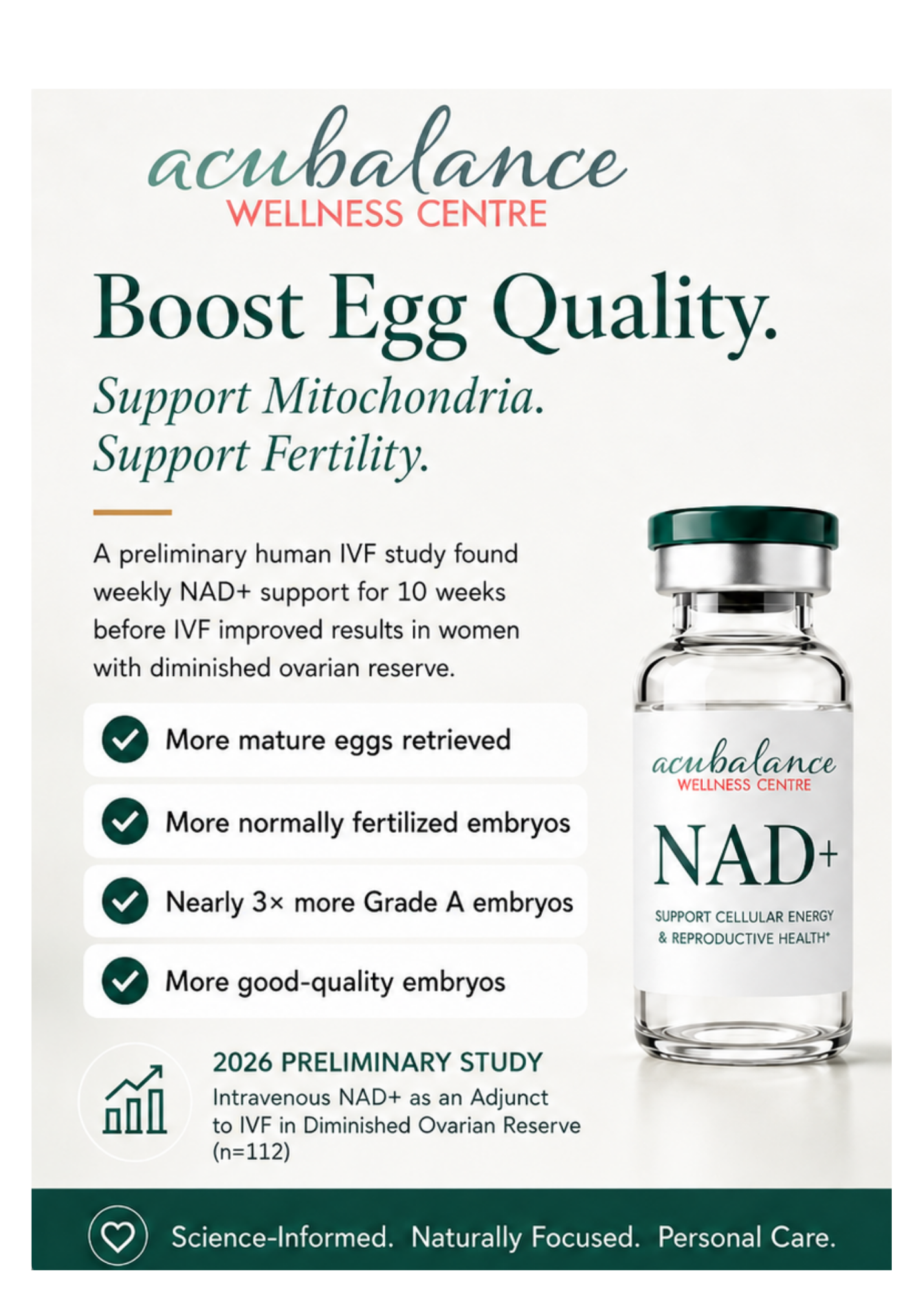
NAD+ (nicotinamide adenine dinucleotide) is a coenzyme found in every cell, central to mitochondrial energy production, ATP generation, cellular and DNA repair, metabolic function, and cellular signaling. NAD+ levels naturally decline with age. Since egg quality depends heavily on mitochondrial performance, NAD+ support may be valuable for some patients. While human fertility research on NAD+ remains limited, animal studies have shown promising findings related to mitochondrial function. We currently offer NAD+ support through intramuscular injections and targeted nutrient protocols.
Targeted injections. Some patients benefit from targeted intramuscular injections rather than full IV therapy — such as vitamin D, B vitamins, glutathione, or NAD+ — when we identify specific deficiencies. Vitamin D plays roles in immune function, hormone signaling, regulating inflammation, and reproductive health; B vitamins support methylation, mitochondrial energy production, nervous system function, and hormone metabolism. Iron infusions may be recommended for patients with significant iron deficiency when oral iron is insufficient or poorly tolerated, since iron is essential for oxygen transport, mitochondrial energy production, thyroid function, and cellular metabolism.
We do not believe in a one-size-fits-all approach. We base recommendations on your symptoms, health history, lab work, and overall clinical picture to identify which biological systems need the most support.
Mind-Body Therapy and Nervous System Regulation for Fertility
Since 2000, we have learned that one of the most overlooked aspects of fertility optimization is nervous system regulation. Most patients already understand the more physical aspects — nutrition, supplements, acupuncture, IVF, and increasingly photobiomodulation. But one major piece often receives far less attention: chronic stress and nervous system dysregulation. This matters because chronic stress is not just psychological — chronic stress becomes biology.
When the body does not feel safe and remains stuck in a prolonged stress response, the nervous system shifts into survival mode (fight-or-flight). This can create a cascade of downstream effects: elevated cortisol and stress hormones, poor sleep, blood sugar dysregulation, increased inflammation, oxidative stress, reduced blood flow to the reproductive organs, and impaired mitochondrial function — the very same systems that influence egg quality, implantation, hormone regulation, and fertility resilience. This is one reason we believe nervous system regulation may be one of the missing links behind many cases of unexplained infertility. This is the field of psychoneuroimmunology — the study of how the mind, brain, nervous system, hormones, and immune system influence one another. We are not saying stress causes infertility; fertility challenges are complex and multifactorial. But chronic unresolved stress, hypervigilance, and dysregulation can become meaningful contributing factors.
When the body feels safe, it can heal better. When the parasympathetic nervous system — the rest, digest, repair, and reproduce state — is engaged, the body can more efficiently direct resources toward healing, repair, recovery, creativity, and reproduction. When the body feels chronically unsafe, more resources are diverted toward survival, which tends to take priority over reproduction.
Reducing the noise in the system. One metaphor Dr. Lorne Brown often uses is the radio: the signal is there and the song is playing, but there is so much static you cannot clearly hear it. We think about stress, stored tension, unresolved emotional patterns, chronic hypervigilance, inflammation, and dysregulation as forms of noise in the body. Sometimes a patient’s lab work looks normal — the signal is there — but something still feels off: anxiety, poor sleep, fatigue, digestive symptoms, irregular cycles, or repeated IVF failure despite “normal” testing. Our goal is to help reduce the noise so the body becomes more coherent, adaptable, and receptive — shifting from resistance toward regulation.
The body keeps score. Experiences involving chronic stress, unresolved emotional pain, trauma, or prolonged survival states can leave lasting patterns in the nervous system. In Chinese medicine, this is sometimes described as Qi stagnation — “blocked” or “stuck” energy. These unresolved patterns require internal resources to manage, which can become metabolically expensive — tying up resources that could otherwise be used for healing, reproduction, and creativity.
How we support nervous system regulation. We take an integrative approach, which may include anti-inflammatory nutrition, reducing food sensitivities, movement and exercise, restorative sleep, breathwork, guided meditation, and targeted supplements such as magnesium bisglycinate and calming adaptogens. Acupuncture itself can be deeply regulating — many patients report feeling calmer and more grounded afterward. Photobiomodulation can also support parasympathetic activation depending on protocol; when certain light-based technologies are applied to the head using specific pulsed frequencies, they may support brainwave entrainment (for example, ~10 Hz is associated with relaxed alpha states, while 40 Hz has been studied for effects on neural synchrony, cognition, and emotional regulation). Dr. Lorne Brown, a trained clinical hypnotherapist, offers energy psychology sessions integrated with acupuncture and photobiomodulation as a mind-body therapy, and is the host of The Coherence Code Podcast. We also offer additional wellness technologies — our InHarmony vibroacoustic sound table (vibration, sound frequencies, and binaural beats) and our NeuroVIZR device (programmed flickering light and sound to guide brainwave states) — to help patients access deeper relaxation and recovery.
A more regulated nervous system may help support healthier cortisol rhythms, improved heart rate variability, better sleep, improved metabolic health, better circulation, reduced inflammation, improved mitochondrial function, and greater physiological resilience — the same biological systems that influence egg quality, implantation, and reproductive health.
Who Benefits Most from Egg Quality Optimization?
Almost anyone trying to conceive may benefit from improving the biological environment that supports egg development. That said, some patients tend to benefit more from focused optimization — especially when egg quality, ovarian function, implantation, or embryo development may be contributing factors:
- Women in their mid-30s and beyond — proactively supporting mitochondrial function, reducing inflammation, improving metabolic health, and optimizing the follicular environment before conceiving, pursuing IVF, or freezing eggs.
- Diminished ovarian reserve or low AMH — while we cannot create new eggs, we may help optimize the environment supporting the remaining follicles. The goal becomes improving quality, not quantity.
- Poor embryo quality or low blastocyst rates — poor fertilization, slow embryo development, poor-quality embryos, low blastocyst conversion, or high aneuploidy rates.
- Poor ovarian response during IVF — low egg yield, poor follicular recruitment, or poor egg maturity/quality despite adequate stimulation.
- Recurrent implantation failure — egg quality may be one factor, though implantation is multifactorial (endometrial receptivity, immune regulation, inflammation, microbiome balance, uterine blood flow).
- Recurrent pregnancy loss or miscarriage — one contributor may be chromosomal abnormalities arising from poor egg quality.
- PMOS (formerly PCOS) — insulin resistance, metabolic dysfunction, inflammation, ovulatory dysfunction, and hormonal dysregulation can affect egg quality, ovulation, and implantation.
- Endometriosis — associated with chronic inflammation, oxidative stress, immune dysregulation, and an altered pelvic environment.
- Unexplained infertility — often not truly unexplained, but under-investigated (mitochondrial dysfunction, oxidative stress, inflammation, metabolic dysfunction, microbiome imbalance, nervous system dysregulation).
- Preparing for egg freezing — because the quality of eggs frozen today matters later.
- Male factor and DNA fragmentation — fertility is never only about the egg; sperm quality matters too, which is why we often encourage both partners to optimize together.
- Anyone focused on the health of their future baby — what happens in the ~100 days before conception, for both partners, may influence epigenetics — the biological signals that help shape your baby’s developmental blueprint.
When Should You Start Improving Egg Quality?
The short answer: the earlier you start, the better. IVF is often not successful on the first attempt — it is not uncommon to need multiple embryo transfers before a take-home baby, depending on age, diagnosis, embryo quality, uterine receptivity, and other factors. This helps explain why many patients seek additional support before or between IVF cycles.
The 100-day window: “trimester zero” or your “fer-mester.” We often refer to the roughly 100 days before conception as trimester zero — the trimester before pregnancy. While folliculogenesis begins many months earlier (roughly 8–12 months before ovulation), the final 85 to 100 days are especially important. During this period, follicles rapidly increase in size and become increasingly responsive to blood flow, oxygen delivery, nutrient availability, hormonal signaling, mitochondrial support, inflammation regulation, metabolic health, and nervous system regulation. The egg you ovulate or retrieve is heavily influenced by the internal environment created during the previous 3 to 4 months.
Fertility is about more than getting pregnant. Our goal is to help support a healthy pregnancy, a healthy baby, and a healthy mom. The ~100 days before conception may also influence epigenetics. Interestingly, Chinese medicine recognized a similar concept thousands of years ago — describing prenatal Jing (essence) as the inherited foundation you are born with (similar to genetics) and postnatal Jing as the influence of diet, lifestyle, environment, and life experiences after birth (similar to epigenetics). For example, when your grandmother was pregnant with your mother, your mother already carried the immature eggs that could one day become you — illustrating how biology can influence multiple generations.
Why starting early matters. We often use the marathon-training analogy: you would not wait until two weeks before race day to begin training and expect peak performance. Waiting until IVF stimulation starts means you may have only 10 to 14 days to influence the follicles about to be retrieved — far less than the full 100-day opportunity.
Our timing recommendations:
- Good — 4–8 weeks before IVF or a conception attempt. Even a month is better than nothing — some time to improve circulation, reduce stress, regulate sleep, and begin improving metabolic health.
- Better — 8–12 weeks before. This aligns more closely with the most clinically meaningful part of the egg maturation window; for many patients, the minimum we recommend when possible.
- Best — 3–6+ months before IVF, egg freezing, or trying to conceive. Enough time to create more meaningful changes in physiology and habits — especially for complex cases (diminished ovarian reserve, PMOS, endometriosis, recurrent implantation failure, recurrent miscarriage, repeated failed IVF, poor embryo development).
What if you are already in an IVF cycle? Do not panic — it is still worth doing something. Even if stimulation has started or transfer is days away, acupuncture, photobiomodulation, stress reduction, sleep optimization, nutrition, and targeted supplements may still help support egg maturation, uterine receptivity, and nervous system regulation. It is never too late to support your fertility.
Frequently Asked Questions
Can egg quality improve?
In many cases, yes — or more accurately, the biological environment that supports egg development can improve. While we cannot change chronological age or create new eggs, we may be able to improve the environment in which eggs mature, including supporting mitochondrial function, blood flow, inflammation regulation, oxidative stress reduction, metabolic health, hormonal balance, and nervous system regulation. Because eggs are highly influenced by their surrounding follicular environment, improving that environment may help optimize egg quality and fertility potential.
Can egg quality improve after 40?
Potentially, yes. Age remains one of the strongest predictors of egg quality because both quantity and quality decline over time. However, chronological age is only part of the story — biological age also matters. Two women who are both 40 may have very different fertility potential depending on mitochondrial health, inflammation, metabolic health, lifestyle, stress levels, and overall resilience. While we cannot change chronological age or guarantee pregnancy, we may be able to improve aspects of biological aging by supporting mitochondrial function, reducing inflammation, improving metabolic health, and optimizing the environment in which eggs mature.
Can egg quality improve at 42, 43, or 44?
Potentially, yes — but age-related decline becomes increasingly significant in the 40s. At these ages, egg quantity and chromosomal normality both decline, which can make conception and healthy pregnancy more challenging. That said, chronological age in your early 40s is still only part of the picture; we often see women of the same age with very different fertility potential. Our goal is to help optimize the biological environment in which eggs mature so you can maximize your fertility potential at whatever age you are.
How long does it take to improve egg quality?
Ideally, give yourself at least 3 to 4 months. The egg you ovulate this month did not develop in the past few days. While folliculogenesis begins many months earlier, the final 85 to 100 days are especially important for impacting egg quality. This is why Acubalance often recommends beginning fertility optimization at least 100 days before trying to conceive naturally, IUI, IVF retrieval, egg freezing, or frozen embryo transfer preparation. That said, even if you have less time, doing something is usually better than doing nothing.
Can you improve AMH?
AMH (anti-Müllerian hormone) is a marker of ovarian reserve — it mainly reflects egg quantity, not quality. It is not a perfect or absolute number: some women on birth control pills show artificially suppressed AMH that may rise after stopping, and values may vary by lab, which is why we recommend using the same lab when tracking over time. In some cases, AMH may improve modestly after addressing inflammation, metabolic dysfunction, oxidative stress, nutrient deficiencies, and mitochondrial health. But the bigger goal is not chasing a lab number — it is improving fertility outcomes such as healthier eggs, better embryo development, better IVF response, and improved pregnancy potential. A higher AMH does not automatically mean better egg quality.
Does AMH measure egg quality?
No. AMH primarily reflects ovarian reserve, not egg quality. You can have low AMH and still conceive naturally, or high AMH and still struggle with egg quality. Egg quality is influenced by age, mitochondrial function, oxidative stress, inflammation, metabolic health, and hormonal regulation. AMH can help predict how the ovaries may respond during IVF and roughly how many eggs may be retrieved, and can help with family planning — but it does not tell us whether those eggs are genetically normal or capable of producing a healthy embryo. We use AMH as one piece of the puzzle, not the whole picture.
Does low AMH mean poor egg quality?
Not necessarily. Low AMH mainly suggests reduced ovarian reserve — fewer remaining recruitable follicles. It does not automatically mean poor egg quality. Some women with low AMH still conceive naturally, produce healthy embryos, and have successful pregnancies. While egg quality often declines with age, AMH alone cannot tell us whether your eggs are genetically normal. This is why we never interpret AMH in isolation — we look at the full clinical picture, including age, cycle history, antral follicle count, hormones, metabolic health, and overall fertility history.
Can acupuncture improve egg quality?
Research suggests acupuncture may help support egg quality indirectly by improving the biological systems connected to fertility, including blood flow to the ovaries and uterus, nervous system regulation, HPO axis signaling, inflammation regulation, stress reduction, and sleep quality. Studies also suggest acupuncture may help reduce anxiety in patients undergoing IVF. At Acubalance, acupuncture is one of our core therapies because it influences multiple fertility-related systems simultaneously.
Can red light therapy or photobiomodulation improve egg quality?
Photobiomodulation (PBM) — also known as low-level laser therapy (LLLT) or red light therapy — is one of the most exciting emerging adjunct therapies in fertility medicine. Research suggests PBM may support mitochondrial function and ATP production, blood flow, angiogenesis, inflammation regulation, metabolic health, and nervous system regulation. Because egg quality depends heavily on mitochondrial health and cellular energy, therapies that support mitochondrial function may help improve fertility potential.
What supplements help egg quality?
There is no single best supplement for egg quality — the best supplement depends on your individual needs. At Acubalance, we usually begin with foundational support such as a prenatal vitamin, omega-3, vitamin D, magnesium, and NAC. Common supplements used to support mitochondrial function and egg quality may include CoQ10, PQQ, NAD support (NR / NMN), L-carnitine, alpha-lipoic acid, and myo-inositol. We prefer targeted supplementation based on history, symptoms, and laboratory testing rather than a shotgun approach.
Can Chinese herbs improve egg quality?
Chinese herbal medicine has been used for fertility for thousands of years. Research suggests certain herbal formulas may help support ovarian function, mitochondrial function, circulation, inflammation regulation, insulin sensitivity, and endometrial receptivity. At Acubalance, we often combine herbs with acupuncture and photobiomodulation to provide layered support. Herbal treatment is highly individualized and depends on your full clinical picture.
Can poor egg quality cause miscarriage?
Yes. Poor egg quality may increase the risk of chromosomal abnormalities in embryos, and chromosomal abnormalities are one of the most common causes of miscarriage, especially as maternal age increases. That said, miscarriage is complex — egg quality is only one possible factor. Others may include sperm quality, uterine factors, immune dysfunction, inflammation, clotting issues, and hormonal imbalance.
Does sperm quality affect embryo quality?
Yes, absolutely. Egg quality gets most of the attention, but sperm contributes 50% of the genetic material to the embryo. Poor sperm quality, including DNA fragmentation, may negatively affect fertilization, embryo development, implantation, and miscarriage risk. This is why we often recommend evaluating both partners when optimizing fertility — healthy embryos require both healthy eggs and healthy sperm.
Can poor egg quality cause failed implantation?
Potentially, yes. Egg quality affects embryo quality, and embryo quality is one of the most important factors influencing implantation. A poor-quality egg may still fertilize, but the resulting embryo may have chromosomal abnormalities, poor developmental potential, or reduced implantation capacity. That said, implantation is complex — even a high-quality embryo may be affected by uterine receptivity, inflammation, immune factors, blood flow, microbiome balance, or hormonal issues. This is why we look at both embryo quality and uterine receptivity.
Can stress affect egg quality?
Chronic stress may negatively affect fertility and may slow time to pregnancy. However, the relationship is complex — it is often less about the external stressor itself and more about how your nervous system perceives and responds to it over time. When the nervous system remains stuck in a chronic stress or survival state, it can negatively affect cortisol regulation, blood sugar balance, inflammation, immune function, sleep quality, blood flow to reproductive organs, and hormonal signaling — which may negatively impact egg quality and fertility potential. We believe nervous system regulation is one of the most overlooked aspects of fertility optimization.
Can PMOS (formerly PCOS) affect egg quality?
Yes, in some patients. PMOS often involves insulin resistance, inflammation, hormonal imbalance, elevated androgens, metabolic dysfunction, and oxidative stress, which may negatively affect ovulation, egg quality, embryo quality, and uterine receptivity. The good news is that many of these biological systems are modifiable — improving metabolic health, insulin sensitivity, inflammation, and hormone balance can significantly improve fertility outcomes.
Can endometriosis affect egg quality?
Yes. Endometriosis may negatively affect fertility through multiple mechanisms including inflammation, oxidative stress, pelvic adhesions, altered immune function, impaired implantation, and poorer egg quality. Severity varies widely from patient to patient. At Acubalance, we often focus on reducing inflammatory burden and improving the fertility environment in patients with endometriosis.
Is it worth trying to improve egg quality before IVF?
In many cases, yes. Not all IVF cycles succeed on the first attempt, and many patients require multiple embryo transfers before a take-home baby. Improving egg quality before IVF may help support egg maturation, embryo development, blastocyst formation, implantation potential, and pregnancy outcomes. We typically recommend beginning fertility optimization at least 3 to 6 months before egg retrieval when possible.
What is the best way to improve egg quality naturally?
There is rarely one single solution. At Acubalance, we focus on improving the major biological systems that influence egg quality — often including fertility nutrition, exercise and movement, deep restorative sleep, stress reduction, acupuncture, photobiomodulation, targeted supplements, nutritional IV therapy, Chinese herbal medicine, and nervous system regulation. Rather than chasing a magic bullet, we focus on improving the internal environment in which eggs develop, to help move the body from a subfertile state toward greater fertility resilience and peak fertility potential.
Next Steps
If there is one message we hope you take away, it is this: although your age matters, it is not the whole story. Egg quality is influenced by many interconnected biological systems — mitochondrial health, inflammation, oxidative stress, metabolic health, circulation, hormones, and nervous system regulation. Some of these decline with age; many are modifiable. This is why we focus on what you can influence.
Rather than obsessing over a single lab value like AMH or searching for one magic-bullet supplement, we take a broader, more strategic view. We ask: what is driving this person’s subfertility? What biological systems need the most support? Where are the biggest opportunities for change? Using our “nourish the soil before planting the seed” philosophy, our goal is to improve the internal environment in which eggs mature, embryos develop, and implantation occurs — combining the best of conventional fertility care with evidence-informed integrative therapies: acupuncture, photobiomodulation, targeted supplements, nutritional IV therapy, Chinese herbal medicine, nutrition and lifestyle optimization, and nervous system regulation and mind-body therapies.
We rarely think in terms of one therapy doing everything. Instead, we think in terms of multiple strong horses pulling the carriage together. The right combination depends on your history, diagnosis, timeline, age, and fertility goals. Most importantly, our goal is not simply to help you get pregnant — it is to help you improve your chances of healthy eggs, healthy embryos, successful implantation, a healthy pregnancy, a healthy baby, and a healthy mom.
Whether you are trying naturally, preparing for IVF, navigating low AMH, PMOS/PCOS, endometriosis, recurrent implantation failure, or recurrent pregnancy loss — or simply wanting to be proactive — you do not have to figure this out alone. We have been helping fertility patients since 2000. If you are feeling overwhelmed and wondering what to do next, contact us. We can help you make sense of it all and guide you toward the next best steps. Not sure where to start? Download our free Acubalance Fertility Diet for our whole-food, anti-inflammatory principles plus 21 days of sample menus.
Medically reviewed by Dr. Lorne Brown, B.Sc, CPA, Dr. TCM, FABORM, CHt, CLT, RTT, OBAAM, and Dr. Kali MacIsaac Francis, ND, HBSc, MSCP.
Research references (Chinese herbal medicine & fertility)
- Lian F, Wu H-C, Sun Z-G, et al. Effects of Liuwei Dihuang Granule on the outcomes of IVF-ET in infertility women with Kidney-yin deficiency syndrome and the proteome expressions in the follicular fluid. Chin J Integr Med. 2014;20(7):503–509. doi:10.1007/s11655-014-1712-y.
- Gao Q, Han L, Li X, Cai X. Traditional Chinese Medicine, the Zishen Yutai Pill, Ameliorates Precocious Endometrial Maturation Induced by Controlled Ovarian Hyperstimulation and Improves Uterine Receptivity via Upregulation of HOXA10. Evid Based Complement Alternat Med. 2015;2015:317586.
- Wu H, et al. Clinical efficacy and pharmacological mechanism of Er Zhi Tian Gui formula in enhancing IVF-ET outcomes for diminished ovarian reserve. Front Pharmacol. 2025;16:1552581.
- Li X, et al. Bu Shen Zhu Yun Decoction Improves Endometrial Receptivity via VEGFR-2-Mediated Angiogenesis. Evid Based Complement Alternat Med. 2019;2019:3949824.
- Bushen Huoxue formula for the treatment of diminished ovarian reserve: a combined metabolomics and integrated network pharmacology analysis. Heliyon. 2023;9(11):e21797.
Chinese herbal medicine is individualized and prescribed by a qualified practitioner. The studies above are early or small trials; they support clinical interest, not guaranteed outcomes.