Trying Letrozole for PCOS? How Adding Acupuncture Can Increase Pregnancy Rates by Over 80%
For individuals with polycystic ovary syndrome (PCOS), fertility challenges often extend beyond ovulation alone. Ovulatory dysfunction is common, with ovulation that may be irregular or absent, but this is only one part of the fertility picture.
Equally important—and often less discussed—are the inflammatory, metabolic, and hormonal patterns associated with PCOS that can negatively affect egg quality, which in turn influences embryo development, as well as the uterine environment needed to support implantation and pregnancy.
Clinically, this may show up as poorer-quality embryos, difficulty with implantation, or a higher risk of miscarriage. As a result, even individuals with PCOS who produce multiple embryos during an IVF cycle may still experience implantation failure or pregnancy loss after embryo transfer. This highlights a key reality: successful pregnancy depends on both a healthy embryo and a supportive uterine environment capable of nurturing pregnancy.
A new 2025 scientific review now shows that adding acupuncture to letrozole (used to induce ovulation) significantly improves pregnancy rates in people with PCOS—findings that are relevant whether conception occurs naturally, with ovulation induction, or through IVF.
What Did the Study Examine?
A 2025 meta-analysis titled:
“Meta-analysis of the effects of acupuncture combined with letrozole on ovulation induction and pregnancy outcomes in patients with polycystic ovary syndrome”
Journal of Manipulative and Physiological Therapeutics, 2025
reviewed 15 randomized controlled trials involving 1,311 individuals with PCOS.
The researchers compared outcomes between:
• letrozole alone
• letrozole combined with acupuncture
Because a meta-analysis pools results from multiple randomized trials, it provides a broader view of how treatments perform across different clinical settings.
What Were the Key Findings?
When acupuncture was added to letrozole, participants experienced significant improvements across multiple fertility-related outcomes.
⎯ Ovulation outcomes ⎯
Ovulation was approximately 30% more likely when acupuncture was included (relative risk 1.30).
⎯ Pregnancy outcomes ⎯
Pregnancy rates were approximately 84% higher with acupuncture (relative risk 1.84).
⎯ Uterine environment ⎯
Participants showed increased endometrial thickness and higher rates of Type-A endometrium, which is associated with improved implantation potential.
⎯ Hormonal balance ⎯
Lower luteinizing hormone (LH), lower testosterone, and improved estrogen levels were observed. These hormonal shifts support egg maturation, cycle regulation, and early pregnancy stability—not ovulation alone.
⎯ Pregnancy sustainability ⎯
Miscarriage rates were significantly lower when acupuncture was part of care.
Taken together, these findings suggest that acupuncture supports both egg quality and the uterine environment required to sustain pregnancy.
Why Having More Eggs and Embryos Doesn’t Always Lead to A Live Birth
Many individuals with PCOS are surprised to learn that producing embryos—whether through letrozole-supported cycles or IVF—does not guarantee implantation or an ongoing pregnancy.
Successful pregnancy requires two factors working together:
1. a healthy embryo (which begins with egg and sperm quality)
2. a receptive, well-regulated uterine environment capable of nurturing pregnancy
Egg quality is influenced by blood flow to the ovaries, hormonal balance, blood sugar regulation, inflammation and oxidative stress, and the nervous system state during follicle development.
Even high-quality embryos may struggle if the uterine environment is inflamed, poorly perfused, hormonally imbalanced, or affected by chronic stress. Supporting both sides—the embryo and the environment that supports pregnancy—is essential.
Why Does Acupuncture Help?
Acupuncture supports system-wide regulation rather than simply stimulating ovulation.
Research suggests acupuncture may help by improving signaling along the hypothalamic–pituitary–ovarian axis, enhancing blood flow to the ovaries and uterus, reducing chronic inflammation, supporting healthier hormonal and metabolic signaling, and calming an overactive autonomic nervous system.
These effects influence egg quality, implantation, immune balance, and the body’s ability to sustain pregnancy.
What the Researchers Cautioned
The authors noted that while the results are encouraging, the overall quality of the included studies was low, and higher-quality trials are still needed.
This limitation highlights why individualized clinical care remains important alongside research findings.
How We Build on This at Acubalance in Vancouver
The study evaluated acupuncture combined with letrozole only.
At Acubalance in Vancouver, we take a whole-systems, integrative approach to fertility care in PCOS, addressing egg quality, sperm quality, uterine receptivity, and early pregnancy support simultaneously.
Our care may include:
⎯ Acupuncture ⎯
To regulate hormones, improve blood flow to the ovaries and uterus, reduce inflammation, and support nervous system balance—key factors influencing egg and sperm quality.
⎯ Chinese Herbal Medicine ⎯
Individually prescribed to support egg maturation, sperm health, endometrial receptivity, cycle regulation, and inflammatory or stress-related patterns common in PCOS.
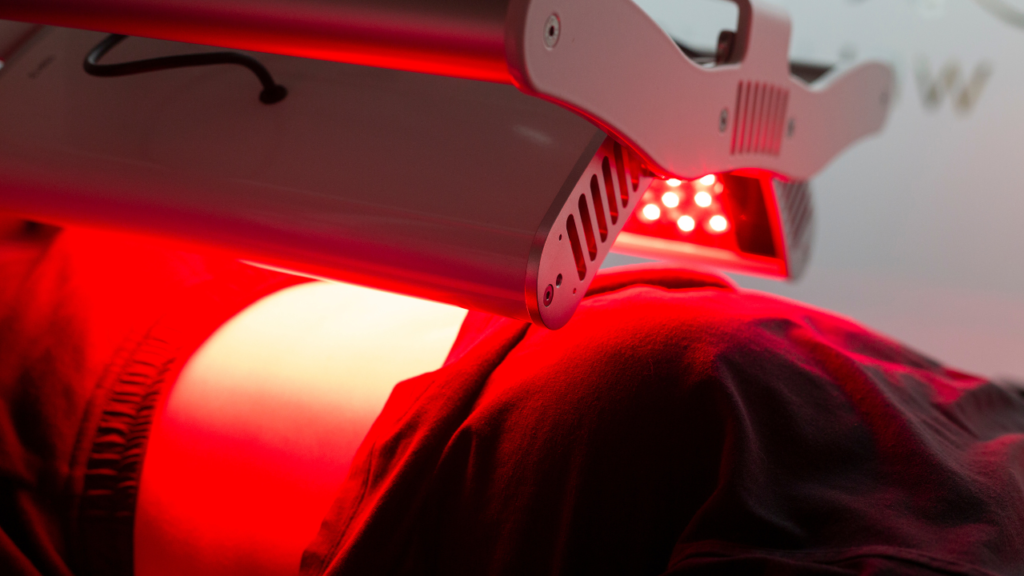
⎯ Low-Level Laser Therapy (Photobiomodulation) ⎯
Used to support cellular and mitochondrial function, pelvic blood flow, ovarian and uterine tissue health, blood sugar regulation, inflammatory regulation, and reduction of oxidative stress. Photobiomodulation may also help engage the parasympathetic (“rest and digest” or “breed and feed”) nervous system, supporting hormonal signaling and communication between the brain and reproductive organs.
⎯ Nutritional & IV Therapy ⎯
For some individuals with PCOS—particularly those with inflammation, metabolic challenges, or gut absorption issues—nutritional support can be helpful. IV therapy allows nutrients to bypass the digestive tract and be delivered directly to the cells during periods of increased physiological demand.
⎯ Nervous System Regulation ⎯
The nervous system directly influences hormones, inflammation, immune function, egg quality, and uterine receptivity. Support may include the InHarmony Vibroacoustic Sound Table, as well as Energy Psychology and Conscious Work (mind–body approaches) to reduce stress patterns, support immune balance, and improve internal regulation.
Together, these approaches help create conditions that support healthy eggs, healthy sperm, and a uterine environment capable of nurturing pregnancy.
Final Takeaway
This 2025 review reinforces what we see clinically every day: fertility improves when we support both egg and sperm quality, along with the uterine environment that sustains pregnancy.
Acupuncture and integrative care don’t replace letrozole or IVF—they help the body respond more effectively to them.
Click here for: Link to Study
Want to Learn More?
If you have PCOS and are:
• trying to conceive naturally
• using letrozole for ovulation induction
• preparing for IVF or embryo transfer
Contact Acubalance in Vancouver to learn how an integrative approach may support egg quality, sperm quality, uterine receptivity, and early pregnancy.