How to Improve Your Chances of IVF Success in Vancouver
Evidence-informed, personalized integrative fertility care to help optimize egg quality, embryo quality, implantation, and reproductive health before, during, and after IVF.
- Overview
- Embryo Transfer Acupuncture
- Two Key Areas to Focus On
- Why IVF Doesn’t Always Work
- How We Help
- FAQ
- Next Steps
- Egg Quality
- Implantation & FET
Overview
If you’re searching for ways to improve your chances of IVF success, you’re not alone. Whether you’re preparing for your first IVF cycle, recovering from an unsuccessful embryo transfer, or planning your next attempt, it’s natural to have questions such as: Why didn’t my embryo implant? Can I improve my egg quality or embryo quality? Is there anything I can do before my next IVF cycle? Should I have more testing before trying again? Is there anything beyond IVF medications that may help?
These are some of the most common questions we hear from patients every day. The encouraging news is that while there are no guarantees in fertility care, there are often opportunities to improve your chances of IVF success by optimizing your health before, during, and after treatment.
At Acubalance Vancouver, we believe successful IVF is about much more than retrieving eggs and transferring embryos. Our goal is to help create the healthiest possible ovarian ecosystem, uterine environment, and overall reproductive environment to support healthy eggs, healthy sperm, embryo development, implantation, and ultimately a healthy pregnancy and baby.
Since 2000, we’ve helped thousands of individuals and couples throughout British Columbia prepare for IVF, support embryo transfer, and navigate the challenges that can arise when treatment doesn’t go as hoped. We work alongside your reproductive endocrinologist and IVF clinic, providing personalized integrative fertility care that complements your medical treatment.
Many of our patients first come to us after an unsuccessful IVF cycle and say, “I just want to know if there’s anything else I can do.” Others begin working with us three or more months before egg retrieval because they want to optimize their health before starting treatment. Both approaches are valid. Whenever possible, however, we believe preparation is better than reaction.
This philosophy forms the foundation of The Acubalance Integrative Fertility Care Approach. Rather than recommending the same treatment for everyone, we help identify the biological systems that may be influencing your fertility, prioritize the most appropriate testing and therapies, and develop a personalized plan based on your medical history, fertility diagnosis, treatment timeline, and goals.
Your personalized care plan may include appropriate fertility testing together with one or more complementary therapies, including:
- Acupuncture
- Laser acupuncture using professional photobiomodulation (PBM), also known as low level laser therapy (LLLT) and red light therapy
- Chinese herbal medicine
- IV nutrient therapy, including glutathione IV therapy when appropriate
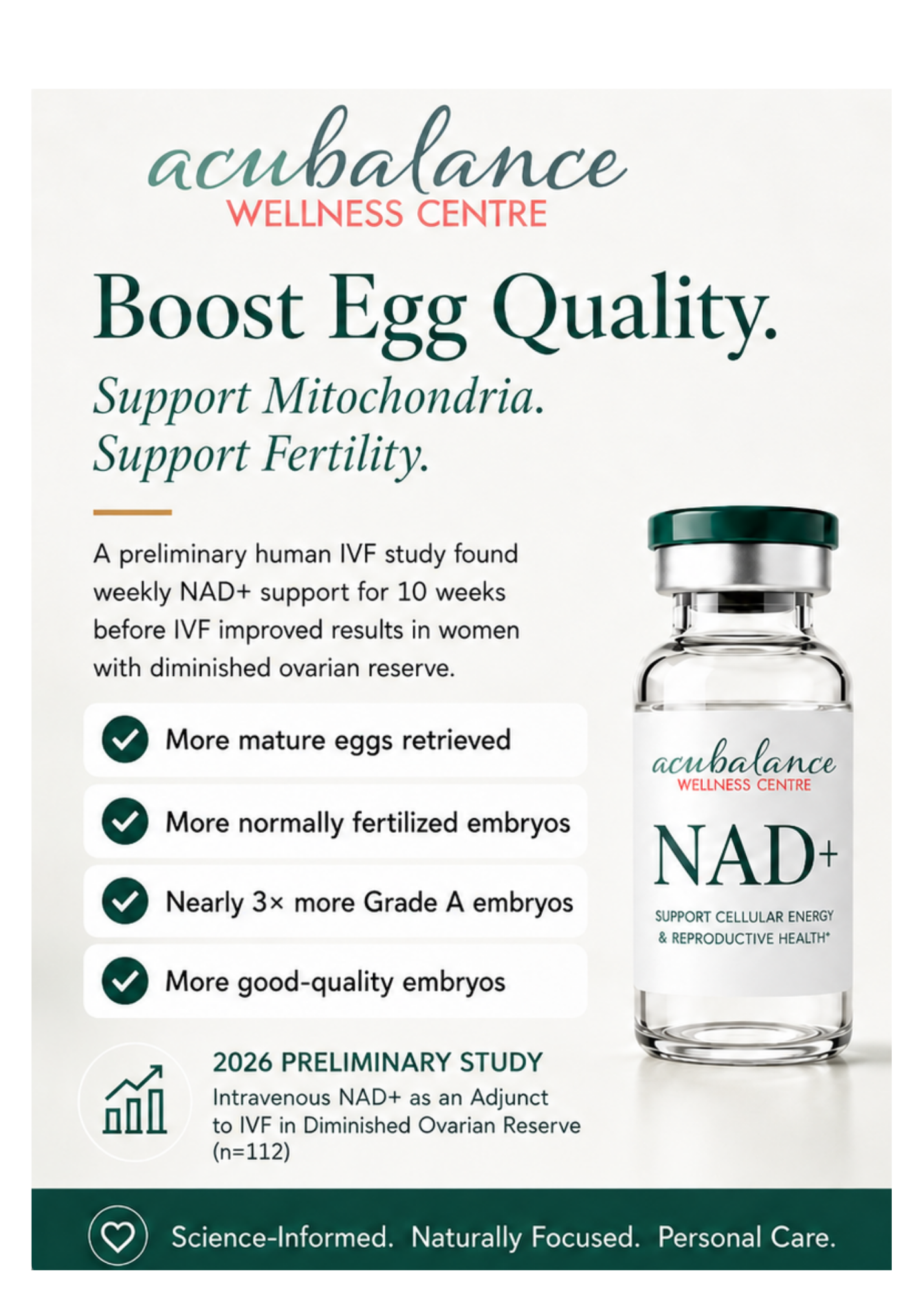
- NAD+ injections
- Targeted nutritional supplementation
- Functional medicine testing
- Nutrition, sleep, exercise, and lifestyle coaching
- Nervous system regulation using evidence informed mind body approaches
The goal isn’t simply to provide individual treatments. It’s to understand your unique fertility story and recommend the combination of therapies most likely to support your reproductive health and improve your chances of IVF success. You don’t need to become an expert in fertility optimization or spend countless hours trying to sort through conflicting advice online. Our role is to help you understand your options, determine what is most relevant to your situation, and develop a personalized plan that works alongside your IVF clinic.
Whether you’re preparing for your first IVF cycle, planning your next embryo transfer, or looking for answers after an unsuccessful attempt, we’re here to help you move forward with greater clarity, confidence, and hope.
The Acubalance Difference: Embryo Transfer Acupuncture + Photobiomodulation
One of the most common questions patients ask is, “Should I have acupuncture around embryo transfer?” The answer is yes, but the timing and dosage matter. Research suggests acupuncture performed before and after embryo transfer may improve implantation and increase the chances of IVF success. More importantly, research also suggests the greatest benefit comes from a series of acupuncture treatments leading up to embryo transfer, rather than a single treatment on transfer day.
Since 2002, Acubalance practitioners have provided onsite acupuncture at Olive Fertility Centre, making us one of the first clinics in British Columbia to integrate acupuncture directly into the IVF embryo transfer process. For patients having embryo transfer at Olive Fertility Centre, Acubalance practitioners provide two acupuncture treatments on transfer day — the first immediately before embryo transfer and the second immediately afterward, allowing patients to receive care without the added stress of travelling between clinics.
We frequently combine acupuncture with professional photobiomodulation because each therapy supports fertility through different biological mechanisms. Together, they may provide broader support than either therapy alone — including healthy blood flow, mitochondrial function, cellular energy production, healthy inflammatory balance, nervous system regulation, and the uterine environment during the implantation window. Transfer day is important. Preparation before transfer is even more important.
Our Embryo Transfer Acupuncture Protocol
For patients receiving care at PCRM, Twig Fertility, Grace Fertility, or other IVF clinics, we provide acupuncture combined with professional photobiomodulation at Acubalance Vancouver. We generally recommend treatment the day before embryo transfer or within 48 hours before transfer, followed by another treatment within 48 hours after embryo transfer, for both fresh and frozen embryo transfers.
At Acubalance Vancouver, we believe embryo transfer acupuncture is most effective when it is part of a comprehensive preparation strategy. Whenever possible, we recommend beginning treatment during the weeks leading up to embryo transfer, with acupuncture combined with professional photobiomodulation (PBM), also known as low level laser therapy (LLLT) and red light therapy. This approach may help support healthy blood flow, mitochondrial function, cellular energy production, healthy inflammatory balance, nervous system regulation, and the uterine environment during the implantation window.
Many people think IVF acupuncture is something you do only on embryo transfer day. At Acubalance Vancouver, we think differently. We believe the greatest opportunity to improve your chances of IVF success begins before embryo transfer.
The Two Key Areas to Focus On to Improve Your Chances of IVF Success
Every fertility journey is unique, but there are two key areas to focus on that offer some of the greatest opportunities to improve your chances of IVF success. The first is the final 100 days (approximately 90 to 120 days) before egg retrieval, when eggs and sperm complete their final stages of development. The second is the three weeks leading up to embryo transfer, when the uterus prepares for implantation.
Although these time periods have different biological goals, they share the same purpose: creating the healthiest possible environment for fertilization, embryo development, implantation, and ultimately a healthy pregnancy. Rather than focusing on one treatment or supplement, The Acubalance Integrative Fertility Care Approach begins by identifying the biological systems that may be influencing your fertility. We then develop a personalized plan that may include appropriate testing together with complementary therapies that work toward the same biological goals while supporting the care you receive from your IVF clinic.
1. Improve Egg Quality During the Final 100 Days Before Egg Retrieval
The final 100 days (approximately 90 to 120 days) before egg retrieval represent one of the most important periods to improve your chances of IVF success. During this time, eggs complete their final stages of development before ovulation, while sperm mature over approximately three months. The environment in which these cells develop may influence fertilization, embryo quality, blastocyst development, and ultimately the chance of creating a healthy embryo for transfer.
Many patients are surprised to learn that this is one of the few windows during which nutrition, sleep, movement, metabolic health, inflammation, mitochondrial function, hormonal balance, and nervous system regulation may all influence reproductive health. Rather than focusing only on the egg itself, we focus on optimizing the ovarian ecosystem, also referred to as the ovarian environment, where eggs develop. Healthy eggs do not exist in isolation. They depend on healthy surrounding cells, adequate blood flow, healthy mitochondria, balanced hormones, proper metabolism, and a supportive biological environment throughout their development.
As part of The Acubalance Integrative Fertility Care Approach, we identify the factors most likely to be influencing your fertility and develop a personalized plan that may include appropriate testing together with complementary therapies working toward the same biological goals. Depending on your individual needs, this may include acupuncture, laser acupuncture using professional photobiomodulation (PBM), Chinese herbal medicine, IV nutrient therapy, glutathione IV therapy, NAD+ injections, targeted nutritional supplementation, nutrition and lifestyle coaching, nervous system regulation, and additional testing when appropriate.
Read our complete guide: How to Improve Egg Quality Naturally and Before IVF.
2. Prepare the Uterine Environment During the Three Weeks Before Embryo Transfer
Creating a healthy embryo is only part of the IVF journey. The uterus must also be ready to receive and support that embryo. The three weeks leading up to embryo transfer provide an important opportunity to optimize uterine receptivity and create the healthiest possible environment for implantation. Whether you’re preparing for a fresh embryo transfer or a frozen embryo transfer (FET), this period allows us to focus on the biological systems that support implantation and the earliest stages of pregnancy.
Successful implantation depends on much more than embryo quality alone. Blood flow, hormonal balance, inflammation, endometrial receptivity, the vaginal and uterine microbiome, metabolic health, and nervous system regulation all contribute to the uterine environment, sometimes referred to as the uterine ecosystem, that receives and supports the embryo. Rather than focusing only on embryo transfer day, we focus on optimizing the uterine environment before the embryo is transferred, creating the healthiest possible conditions for implantation.
As part of The Acubalance Integrative Fertility Care Approach, we identify the factors most likely to be influencing implantation and develop a personalized plan that may include appropriate testing together with complementary therapies. Depending on your individual needs, this may include acupuncture before, during, and after embryo transfer, laser acupuncture using professional photobiomodulation (PBM), nutritional IV therapy, glutathione IV therapy, NAD+ injections, Chinese herbal medicine, targeted probiotics, nutrition and lifestyle strategies, nervous system regulation, and additional testing such as the Evvy Vaginal Health Test or investigations recommended by your IVF clinic, including assessments of uterine receptivity, when appropriate.
Read our complete guide: How to Improve Implantation and Uterine Receptivity.
You Don’t Have to Figure This Out on Your Own
One of the biggest challenges facing fertility patients isn’t finding information. It’s knowing which information applies to you. Some patients benefit most from improving egg quality before egg retrieval. Others need to focus on preparing the uterine environment for implantation. Some discover an underlying issue such as endometriosis, insulin resistance, thyroid dysfunction, sperm DNA fragmentation, chronic inflammation, or a microbiome imbalance. Others benefit from additional testing that helps identify factors affecting uterine receptivity, embryo development, or overall reproductive health.
The challenge isn’t simply finding more information or trying more treatments. It’s knowing where to focus your time, energy, and resources. That’s where The Acubalance Integrative Fertility Care Approach can help. Our role is to help you understand your options, identify the factors most likely to be influencing your fertility, prioritize the most appropriate testing and therapies, and develop a personalized plan that works alongside your IVF clinic.
Why Doesn’t IVF Always Work?
One of the biggest misconceptions about IVF is that success depends only on creating a healthy embryo. Embryo quality is incredibly important, but it’s only one part of a much larger picture. Successful IVF depends on many interconnected biological systems working together. Healthy eggs and healthy sperm are needed to create healthy embryos. Those embryos must continue developing normally, implant into a receptive uterus, and then grow into a healthy pregnancy.
This is why we focus on much more than the embryo itself. Our goal is to help optimize the ovarian ecosystem, the uterine environment, and the biological systems that support fertility throughout the IVF journey. These include:
- Egg quality and the ovarian ecosystem
- Sperm quality and DNA integrity
- Embryo development
- Uterine receptivity, the uterine environment, and implantation
- Hormonal balance
- Blood flow to the reproductive organs
- Inflammation and immune regulation
- Metabolic health and blood sugar regulation
- Thyroid function
- The gut, vaginal, and uterine microbiome
- Nutrition, sleep, movement, and overall lifestyle
- Nervous system regulation and resilience
For some patients, one factor has the greatest impact. For others, it’s the combination of several smaller factors that together reduce the chances of IVF success. This is one reason why two women of the same age, with similar fertility diagnoses, can experience very different IVF outcomes. The encouraging news is that many of these factors can often be evaluated and, when appropriate, optimized before your next IVF cycle.
The challenge usually isn’t finding another treatment. The challenge is understanding which factors are most relevant to you and knowing where to focus your time, energy, and resources. Instead of asking, “What is the one thing I should do?” we encourage patients to ask a different question: “What are the most important factors I can optimize before my next IVF cycle?”
Why Did My IVF Cycle Fail?
One of the most difficult questions after an unsuccessful IVF cycle is, “Why didn’t it work?” The honest answer is that IVF success depends on many interconnected biological systems, and it isn’t always possible to identify one single reason. Sometimes the explanation is clear. Other times, several smaller factors work together to reduce the chances of success.
The encouraging news is that an unsuccessful IVF cycle does not necessarily predict the outcome of your next cycle. Reviewing what happened, identifying potentially modifiable factors, and developing a personalized strategy before your next IVF cycle may improve your chances of IVF success.
Common Factors That May Influence IVF Success
Egg Quality and the Ovarian Ecosystem
Egg quality is one of the most important factors influencing fertilization, embryo development, and pregnancy. While age affects egg quality, it is only part of the story. The health of the ovarian ecosystem, also referred to as the ovarian environment, during the final 100 days before egg retrieval may also play an important role in supporting healthy egg development. Read our complete guide: How to Improve Egg Quality Naturally and Before IVF.
Sperm Quality and DNA Integrity
A normal semen analysis does not always tell the whole story. Sperm DNA fragmentation, oxidative stress, inflammation, metabolic health, and lifestyle factors may all influence fertilization, embryo development, implantation, and miscarriage risk.
Embryo Development
Not every fertilized egg develops into a healthy blastocyst suitable for transfer. Egg quality, sperm quality, mitochondrial function, metabolism, inflammation, and other biological factors all contribute to embryo development.
Implantation and the Uterine Environment
Even a healthy embryo must implant into a receptive uterine environment. Blood flow, endometrial receptivity, hormonal balance, inflammation, the vaginal and uterine microbiome, and other uterine factors may all influence implantation. Read our complete guide: How to Improve Implantation and Uterine Receptivity.
Underlying Fertility Conditions
Conditions such as endometriosis, PCOS, diminished ovarian reserve, thyroid dysfunction, insulin resistance, chronic endometritis, adenomyosis, uterine abnormalities, and unexplained infertility may all influence IVF outcomes. Identifying and addressing these conditions, when possible, may improve reproductive health before your next IVF cycle.
Overall Health and Lifestyle
Nutrition, sleep, movement, metabolic health, inflammation, body composition, smoking, alcohol, environmental exposures, and nervous system regulation all contribute to the biological environment in which eggs, sperm, embryos, implantation, and healthy pregnancies develop. Optimizing these factors cannot guarantee IVF success, but it may improve your chances of success while supporting your overall reproductive health and wellbeing.
How Do I Know What Is Affecting My IVF Success?
One of the biggest challenges after an unsuccessful IVF cycle isn’t finding information. It’s knowing which information applies to you. The internet is full of advice about supplements, diets, acupuncture, red light therapy, IVF add ons, and the latest fertility research. While many of these approaches may have merit, no single treatment or strategy is right for everyone.
The better question isn’t “What is the best fertility treatment?” It’s “What factors are most likely affecting my fertility, and what can I do to improve them?” We begin by understanding your complete fertility story. We review your medical history, fertility diagnosis, previous IVF cycles, laboratory results, lifestyle, and overall health to identify the biological systems most likely to be influencing your reproductive health. Depending on your history, diagnosis, and goals, we may recommend additional evaluation of areas such as:
- Egg quality and the ovarian ecosystem
- Ovarian reserve
- Sperm quality and DNA fragmentation
- Implantation and uterine receptivity
- Endometrial health and uterine lining
- Hormonal balance and thyroid function
- Blood sugar regulation and metabolic health
- Inflammation and oxidative stress
- Vaginal, uterine, and gut microbiome health
- Nutrition and nutritional deficiencies
- Sleep quality and recovery
- Nervous system regulation and resilience
Some patients benefit from additional blood work or functional medicine testing. Others may benefit from sperm DNA fragmentation testing, vaginal microbiome testing such as the Evvy Vaginal Health Test, or investigations recommended by their IVF clinic, including endometrial biopsy or other assessments of uterine receptivity when clinically appropriate. For many patients, the greatest value isn’t another test or another treatment. It’s having an experienced integrative fertility team help determine what deserves attention first. Rather than trying to do everything, we help you prioritize the testing and therapies most relevant to your diagnosis, treatment timeline, and fertility goals.
How We Help Improve Your Chances of IVF Success
There is no single treatment that improves fertility or IVF success for everyone. Every patient has a unique fertility history, diagnosis, treatment timeline, and set of challenges. That’s why we don’t believe in one size fits all treatment plans. Instead, we use The Acubalance Integrative Fertility Care Approach. This personalized framework helps identify the biological systems most likely to be influencing your fertility and develops a coordinated plan that works alongside your IVF clinic.
Rather than relying on a single therapy, we often combine complementary treatments that work together toward the same biological goals, such as supporting mitochondrial function, improving circulation, regulating inflammation, optimizing metabolic health, supporting hormonal balance, and creating healthier ovarian and uterine environments. Depending on your individual needs, your personalized plan may include one or more of the following:
Acupuncture
Acupuncture is one of the foundations of our integrative fertility program. Research suggests it may help support healthy blood flow to the reproductive organs, nervous system regulation, hormonal balance, inflammation regulation, blood sugar regulation, and overall reproductive health. Large systematic reviews and meta analyses have also reported improvements in implantation, clinical pregnancy, and live birth rates when acupuncture is incorporated into IVF care. At Acubalance Vancouver, acupuncture is integrated with your overall fertility plan and may be recommended before egg retrieval, during ovarian stimulation, before embryo transfer, on embryo transfer day, and during early pregnancy, depending on your individual treatment timeline.
Laser Acupuncture Using Professional Photobiomodulation (PBM)
Professional photobiomodulation (PBM), also known as low level laser therapy (LLLT) and red light therapy, is frequently combined with acupuncture as part of our fertility program. PBM is being studied for its potential to support mitochondrial function, cellular energy production (ATP), circulation, inflammation regulation, tissue repair, blood sugar regulation, nervous system regulation, and reproductive health. At Acubalance Vancouver, we use professional PBM systems and treatment protocols developed specifically for fertility care. Treatments are individualized based on where you are in your fertility journey, whether you’re preparing for egg retrieval, embryo transfer, or supporting early pregnancy.
Chinese Herbal Medicine
When appropriate, Chinese herbal medicine may be incorporated into your personalized fertility plan to support reproductive health, hormonal balance, circulation, inflammation regulation, and overall wellbeing before IVF or between treatment cycles. Recommendations are individualized and coordinated with your fertility diagnosis and IVF timeline.
IV Nutrient Therapy and NAD+ Injections
Depending on your individual needs, we may recommend nutritional IV therapy, glutathione IV therapy, or NAD+ injections to support nutritional status, mitochondrial health, antioxidant capacity, cellular energy production, and overall wellbeing. These therapies are used as part of a broader integrative strategy rather than as standalone treatments.
Targeted Nutritional Supplementation
Rather than recommending the same supplements for everyone, we individualize recommendations based on your medical history, fertility diagnosis, laboratory findings, nutritional status, and treatment goals.
Nutrition and Lifestyle Medicine
Nutrition, restorative sleep, regular movement, maintaining a healthy weight, reducing alcohol, avoiding smoking, supporting metabolic health, and building nervous system resilience all contribute to the biological environment in which eggs, sperm, embryos, implantation, and healthy pregnancies develop.
Functional Medicine Testing
When appropriate, additional testing may help identify factors affecting reproductive health, including inflammation, metabolic health, thyroid function, nutritional status, sperm DNA fragmentation, vaginal and gut microbiome health, and uterine receptivity. We recommend testing thoughtfully, based on your individual history and clinical needs.
Nervous System Regulation
An IVF journey can be emotionally and physically demanding. Learning how to regulate your nervous system may improve resilience, sleep, emotional wellbeing, and your overall experience throughout fertility treatment. Supporting the mind and body together is an important part of The Acubalance Integrative Fertility Care Approach.
No two treatment plans are exactly alike because no two patients are exactly alike. Our role isn’t simply to provide treatments. It’s to understand your fertility story, identify what is most likely limiting your chances of success, and develop a coordinated, personalized plan that complements the care you receive from your IVF clinic.
Frequently Asked Questions
Can I improve my chances of IVF success?
While no treatment can guarantee pregnancy, there are often opportunities to optimize your chances of IVF success by improving your health before, during, and after treatment. Depending on your individual situation, this may include improving egg quality before retrieval, preparing the uterine environment for implantation, addressing underlying medical conditions, optimizing nutrition and sleep, regulating inflammation, supporting metabolic health, and using personalized integrative therapies alongside the care provided by your IVF clinic.
When should I start preparing for IVF?
Whenever possible, begin about three months (approximately 100 days) before egg retrieval. This allows time to support the final stages of egg and sperm development while optimizing your overall health before treatment begins. If your IVF cycle starts sooner, don’t worry. Many patients still benefit from care during ovarian stimulation and in the weeks leading up to embryo transfer.
Can I improve egg quality before IVF?
Although age cannot be changed, the ovarian ecosystem, also referred to as the ovarian environment, may be influenced during the final 100 days before egg retrieval. Supporting mitochondrial function, reducing inflammation and oxidative stress, optimizing nutrition, improving sleep, regulating blood sugar, and supporting the nervous system may all contribute to reproductive health. Read our complete guide: How to Improve Egg Quality Naturally and Before IVF.
Can I improve implantation before embryo transfer?
Yes. Implantation depends on both embryo quality and a healthy uterine environment for implantation. During the three weeks leading up to embryo transfer, we focus on optimizing uterine receptivity through personalized strategies that may include acupuncture, professional photobiomodulation (PBM), nutrition, targeted supplementation, microbiome support, and other therapies based on your individual needs. Read our complete guide: How to Improve Implantation and Uterine Receptivity.
Does acupuncture improve IVF success?
Research suggests acupuncture may support fertility through several biological mechanisms, including healthy blood flow, nervous system regulation, hormone regulation, blood sugar regulation, and healthy inflammatory balance. Large systematic reviews and meta analyses have also reported improvements in implantation, clinical pregnancy, and live birth rates when acupuncture is incorporated into IVF care. At Acubalance Vancouver, acupuncture is not viewed as a standalone treatment. It is combined with other therapies as part of The Acubalance Integrative Fertility Care Approach.
Does red light therapy or photobiomodulation help fertility?
Professional photobiomodulation (PBM), also known as low level laser therapy (LLLT) and red light therapy, is being studied for its potential to support mitochondrial function, ATP production, circulation, inflammation regulation, tissue repair, and reproductive health. At Acubalance Vancouver, PBM is integrated with acupuncture and other therapies based on your fertility diagnosis and treatment timeline. Our professional PBM systems deliver treatment parameters that differ substantially from most consumer home devices.
Should I have acupuncture on embryo transfer day?
Research suggests the greatest benefit comes from a series of acupuncture treatments leading up to embryo transfer, rather than treatment on transfer day alone. Whenever possible, we recommend preparing for embryo transfer with a series of acupuncture treatments combined with professional photobiomodulation during the weeks before transfer. For patients transferring at Olive Fertility Centre, Acubalance practitioners also provide acupuncture immediately before and immediately after embryo transfer at the clinic.
Should I have more testing after an unsuccessful IVF cycle?
It depends on your fertility history and previous treatment. Some patients benefit from additional investigations such as sperm DNA fragmentation testing, vaginal microbiome testing including the Evvy Vaginal Health Test, functional medicine testing, or investigations recommended by their IVF clinic, including endometrial biopsy or assessments of uterine receptivity. Our goal is to help determine which tests are most appropriate for your situation rather than recommending unnecessary investigations.
Can Acubalance work alongside my IVF clinic?
Yes. Our care is designed to complement the treatment provided by your reproductive endocrinologist and IVF clinic. We regularly work with patients receiving care at Olive Fertility Centre, PCRM, Twig Fertility, Grace Fertility, and other IVF clinics throughout British Columbia. Our recommendations are coordinated with your IVF timeline, whether you are preparing for egg retrieval, embryo transfer, or planning another IVF cycle.
Do I need every treatment that Acubalance offers?
No. In fact, most patients don’t. The Acubalance Integrative Fertility Care Approach is based on recommending the therapies most appropriate for your diagnosis, fertility goals, and treatment timeline, not the greatest number of therapies. Some patients benefit primarily from acupuncture. Others may benefit from professional photobiomodulation, Chinese herbal medicine, IV nutrient therapy, NAD+ injections, targeted nutritional supplementation, additional testing, nutrition, or nervous system regulation. Our goal isn’t to recommend more treatments. It’s to recommend the right treatments for you.
Continue Exploring the Fertility Learning Hub
Your IVF journey doesn’t begin or end with embryo transfer. Every stage of the journey presents opportunities to better understand your fertility, optimize your reproductive health, and improve your chances of IVF success. That’s why we’ve created the Acubalance Fertility Learning Hub — a growing collection of evidence informed guides that explain the science behind fertility while providing practical strategies you can discuss with your IVF team and incorporate into The Acubalance Integrative Fertility Care Approach.
Whether you’re preparing for your first IVF cycle, planning your next embryo transfer, or looking for answers after an unsuccessful IVF cycle, these resources will help you better understand the factors that influence fertility and the steps you can take to optimize your health. Each guide explores the latest research, practical strategies, and how multiple therapies may work together to support the healthy biological systems involved in fertility.
Start with our foundational fertility guides: How to Improve Egg Quality Naturally and Before IVF and How to Improve Implantation and Uterine Receptivity. When you’re ready to build a personalized plan that works alongside your IVF clinic, contact us — we can help you make sense of it all and guide you toward the next best steps with greater clarity, confidence, and hope.
Medically reviewed by Dr. Lorne Brown, B.Sc, CPA, Dr. TCM, FABORM, CHt, CLT, RTT, OBAAM, and Dr. Kali MacIsaac Francis, ND, HBSc, MSCP.