
Can Weekly NAD⁺ Intramuscular (IM) Injections Improve Egg Quality in Women with Diminished Ovarian Reserve Before IVF?
Every egg in your ovaries contains thousands of mitochondria. These tiny “power plants” produce the energy needed for an egg to mature, fertilize, develop into a healthy embryo, grow to the blastocyst stage, and ultimately support the energy intensive process of implantation.
Mitochondria generate adenosine triphosphate (ATP), the cell’s energy currency. Eggs contain more mitochondria than almost any other cell in the body because egg maturation, fertilization, embryo development to the blastocyst stage, and implantation all require tremendous amounts of cellular energy.
As we age, our cells accumulate wear and tear from oxidative stress, inflammation, environmental exposures, and normal metabolism. One of the hallmarks of biological aging is a gradual decline in mitochondrial function. While we cannot change our chronological age, we can often influence aspects of our biological age by supporting healthier cellular function. As mitochondria become less efficient at producing energy, this may contribute to poorer egg quality, slower or arresting embryo development before the blastocyst stage, and lower implantation potential.
That is why NAD⁺ has become an exciting area of fertility research.
NAD⁺ (nicotinamide adenine dinucleotide) is a naturally occurring molecule found in every cell. It plays a central role in mitochondrial energy production, DNA repair, healthy aging, and cellular resilience. When NAD⁺ levels decline, mitochondria become less efficient at producing energy.
At Acubalance, we offer NAD⁺ intramuscular (IM) injections as part of our integrative fertility care for appropriate patients who may benefit from additional mitochondrial support.
A Promising 2026 Preliminary IVF Study
A 2026 study evaluated intravenous NAD⁺ therapy in 112 women with diminished ovarian reserve undergoing IVF. As of July 2026, the study has not yet been peer reviewed, so the findings should be considered preliminary. However, the results are encouraging and provide a strong rationale for larger randomized clinical trials.
Study: Intravenous NAD⁺ as an Adjunct to IVF in Diminished Ovarian Reserve: The first Indian within-Subject (Before-After) Study of Oocyte Yield, Oocyte Competence, and Day-3 Embryo Quality
Participants received 200 mg of intravenous NAD⁺ once weekly for 10 weeks before beginning their next IVF cycle. Compared with their previous IVF cycle, researchers found:
• More mature eggs retrieved (4.06 to 6.06)
• More normally fertilized embryos (3.75 to 5.75)
• Nearly three times as many Grade A embryos (1.62 to 4.31)
• More than double the number of good quality embryos overall (2.06 to 4.62)
Perhaps the most exciting finding was that embryo quality improved even more than egg numbers. This suggests NAD⁺ may be enhancing the quality and energy production of the egg itself by supporting healthier mitochondrial function.
To our knowledge, this is the first published human study evaluating NAD⁺ therapy specifically for IVF egg retrieval outcomes. While preliminary, it also provides helpful guidance on treatment dosing and timing. The participants received weekly therapy for 10 weeks rather than a single treatment before retrieval, reinforcing the importance of supporting mitochondrial health throughout the approximately 100 day period of folliculogenesis.
Dose Matters
One of the most important takeaways from this study is that the participants did not receive just a single NAD⁺ treatment before IVF.
They received weekly intravenous NAD⁺ for 10 weeks.
This fits well with what we already know about egg development. An egg begins its final maturation approximately 100 days before ovulation during folliculogenesis.
Supporting mitochondrial function during the approximately 100 days leading up to an IVF egg retrieval may be far more meaningful than waiting until the days immediately before treatment. This gives the developing egg time to benefit from improved mitochondrial function throughout folliculogenesis rather than relying on a last minute intervention.
This principle also aligns with how we use acupuncture and professional photobiomodulation (PBM), also known as low level laser therapy (LLLT), at Acubalance. Rather than relying on a single treatment before egg retrieval, we typically recommend 2 to 3 treatments per week of acupuncture and PBM during the 100 days leading up to an IVF egg retrieval to support mitochondrial function, egg quality, embryo quality, uterine receptivity, and implantation potential.
For patients receiving NAD⁺ intramuscular (IM) injections at Acubalance, a typical protocol is 25 to 100 mg per treatment, given 1 to 2 times per week for approximately 10 weeks before egg retrieval. Your Acubalance Naturopathic Doctor will personalize the dose and treatment schedule based on your health history, fertility goals, and overall fertility plan.

Why Acubalance Takes an Integrative Approach
At Acubalance, we rarely rely on a single therapy to improve egg quality. Healthy mitochondria depend on more than NAD⁺ alone. Inflammation, poor circulation, insulin resistance, poor sleep, chronic stress, nutrient deficiencies, and hormonal imbalances can all impair mitochondrial function and reduce ATP production. Because every patient has a different combination of contributing factors, we use an individualized, integrative approach.
Think of it like travelling a long distance with a horse drawn carriage. Rather than relying on a single horse, several horses work together to pull the carriage. The more healthy horses pulling together, the greater the likelihood of reaching the destination.
Each therapy we recommend is like adding another healthy horse to help pull your carriage toward your destination. While no single intervention is likely to overcome every obstacle, several therapies working through different biological pathways may provide greater support for mitochondrial health and fertility, and more meaningful results.
Depending on your individual needs, your fertility plan may include:
• NAD⁺ intramuscular (IM) injections
• Professional photobiomodulation (PBM), also known as low level laser therapy (LLLT)
• Acupuncture
• Mitochondrial nutrients such as CoQ10, PQQ, and NAD⁺ precursors
• Nutritional IV therapy, including glutathione when appropriate
• Chinese herbal medicine
• Personalized guidance on nutrition, sleep, exercise, and nervous system regulation
Together, these therapies work through different mechanisms but toward the same goal: healthier mitochondrial function, better cellular energy production (ATP), and a healthier environment for egg quality, embryo development, blastocyst development, uterine receptivity, and implantation.
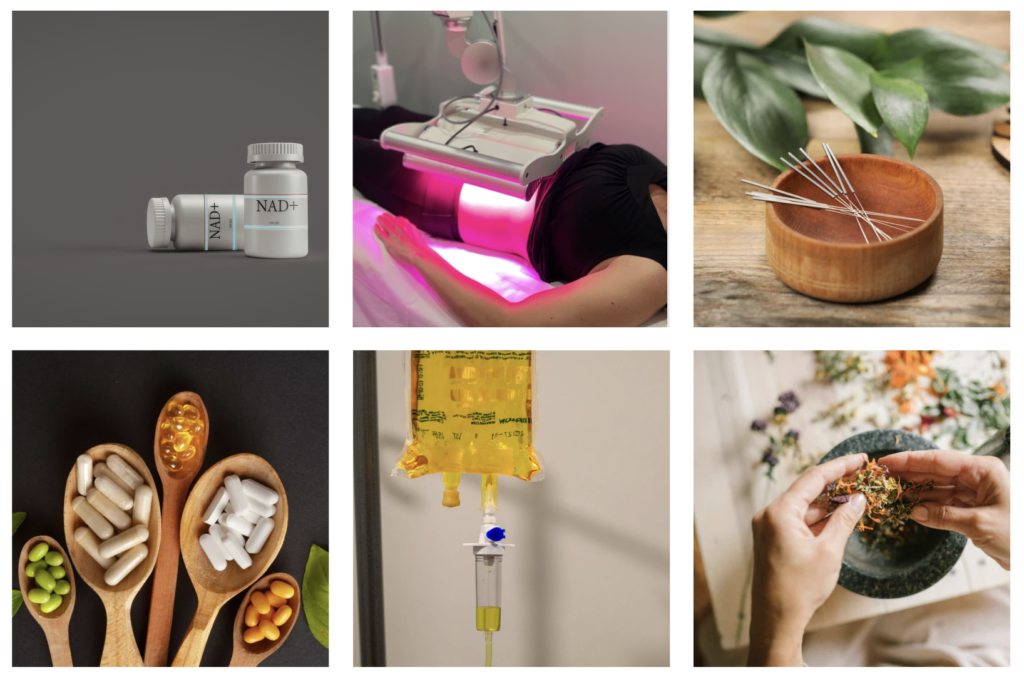
Planning an IVF Cycle? Optimize Mitochondrial Health Before Egg Retrieval
If you are planning an IVF cycle, we generally recommend beginning your fertility optimization program approximately 100 days before egg retrieval. Depending on your individual needs, this may include acupuncture and professional photobiomodulation (low level laser therapy) 2 to 3 times per week, NAD⁺ intramuscular (IM) injections of 25 to 100 mg given 1 to 2 times per week, personalized mitochondrial supplements such as CoQ10, PQQ, and NAD⁺ precursors, nutritional IV therapy with glutathione when appropriate, and Chinese herbal medicine to further support mitochondrial function and ATP production.
Together, these therapies form the Acubalance Integrative Fertility Care Approach, a personalized, multilayered strategy designed to optimize mitochondrial health, support healthier eggs, embryos, and implantation, and help prepare your body for the best possible IVF outcome.
Book Your IVF Integrative Care Consultation and NAD⁺ intramuscular (IM) injections
Frequently Asked Questions
• Does NAD⁺ improve egg quality?
→ NAD⁺ supports mitochondrial function and mitochondrial function plays a critical role in egg maturation, fertilization, embryo development, and implantation. Early research suggests NAD⁺ therapy may improve egg quality and embryo quality in women with diminished ovarian reserve, but larger randomized clinical trials are still needed before definitive conclusions can be made.
• Does NAD⁺ improve diminished ovarian reserve?
→ Current evidence does not show that NAD⁺ increases ovarian reserve or AMH levels. Instead, it may help improve the quality and developmental potential of eggs in women with diminished ovarian reserve by supporting healthier mitochondrial function.
• Why are mitochondria important for fertility?
→ Mitochondria produce ATP, the energy currency of the cell. Eggs contain more mitochondria than almost any other cell because egg maturation, fertilization, embryo development to the blastocyst stage, and implantation all require tremendous amounts of cellular energy.
• When should I start NAD⁺ before IVF?
→ Eggs undergo their final maturation over approximately 100 days before ovulation. Supporting mitochondrial health during this period may be more beneficial than starting treatment only a few days before egg retrieval.
• How often should NAD⁺ intramuscular (IM) injections be given before IVF?
→ At Acubalance, a typical protocol is 25 to 100 mg of NAD⁺ intramuscularly, given 1 to 2 times per week for approximately 10 weeks before egg retrieval. Your Acubalance naturopathic doctor will personalize your treatment plan. This adds up to 10-20 intramuscular (IM) injections in the 10-14 weeks leading up to retrieval.
• Can NAD⁺ be combined with acupuncture and photobiomodulation (LLLT)?
→ Yes. At Acubalance, NAD⁺ is often combined with acupuncture and photobiomodulation (low level laser therapy) because each therapy supports mitochondrial function and fertility through different biological mechanisms.
• Which supplements support mitochondrial health before IVF?
→ Depending on your individual needs, your Acubalance practitioner may recommend supplements such as CoQ10, PQQ, NAD⁺ precursors, omega 3 fatty acids, inositol and other nutrients that support healthy mitochondrial function and ATP production.
• Does photobiomodulation (LLLT) help mitochondria?
→ Yes. photobiomodulation (also known as low level laser therapy or red light therapy) has been shown to stimulate mitochondrial function, increase ATP production, improve circulation, and support healthy cellular repair. At Acubalance, it is commonly combined with acupuncture and other therapies as part of our integrative fertility care approach.
• Is one NAD⁺ treatment enough before IVF?
→ Probably not. The first human IVF study evaluating NAD⁺ used weekly treatments for 10 weeks rather than a single treatment before egg retrieval. This aligns with our philosophy of supporting mitochondrial health throughout the approximately 100 day period of folliculogenesis.
• Who may benefit most from NAD⁺ before IVF?
→ Women with diminished ovarian reserve, advanced maternal age, previous poor embryo quality, repeated IVF failure, or other conditions associated with mitochondrial dysfunction may benefit from discussing NAD⁺ therapy with their fertility team.
• What is the difference between intravenous (IV) NAD⁺ and intramuscular (IM) NAD⁺?
→ The 2026 IVF study used weekly intravenous NAD⁺. At Acubalance, we typically recommend intramuscular (IM) NAD⁺ injections because they are more practical, less expensive, less risk of side effects and easier to incorporate into a fertility treatment plan. While no studies have yet directly compared IV and IM NAD⁺ for fertility, both approaches are intended to support mitochondrial health. Your Acubalance Naturopathic Doctor can help determine which option is most appropriate for you.