
When “Normal” Embryos Don’t Implant
Why Implantation Fails—Even with “Good” Embryos
• Often related to uterine receptivity, not embryo quality
• Acupuncture + EA + LLLT shown to improve implantation outcomes
• Best results seen with layered care over multiple cycles
• Acubalance offers on-site IVF acupuncture & laser therapy at Olive Fertility
A Research-Informed, Multi-Pathway Approach to Recurrent Implantation Failure in IVF & FET
If you’ve transferred PGT-A–tested, chromosomally normal embryos through IVF or frozen embryo transfer (FET) cycles and implantation hasn’t occurred, the issue is often not the embryo. Emerging research highlights endometrial receptivity as a key factor in recurrent implantation failure. This page outlines a research-informed, multi-pathway approach to supporting implantation using acupuncture, electroacupuncture, low-level laser therapy, and nervous-system regulation.
Acubalance are Pioneers of IVF acupuncture integration since 2002 and early developers of fertility-focused low-level laser therapy for fertility in Canada.
Implantation Is an Active Biological Process
Implantation is not passive. It is a highly coordinated, time-sensitive exchange involving:
• A developmentally competent blastocyst
• A hormonally primed, well-vascularized endometrium
• Precisely timed immune, vascular, and molecular signaling
Even when hormone levels and lining thickness appear “normal,” implantation can fail if these signals are mistimed, muted, or dysregulated. This is why patients are often told that everything looks good—while outcomes remain unchanged.
Research in reproductive medicine consistently shows that impaired endometrial receptivity accounts for a large proportion of implantation failures, particularly when embryo quality has already been optimized, including transfers of euploid (PGT-A normal) embryos.
The December 2025 Study That Changed the Conversation
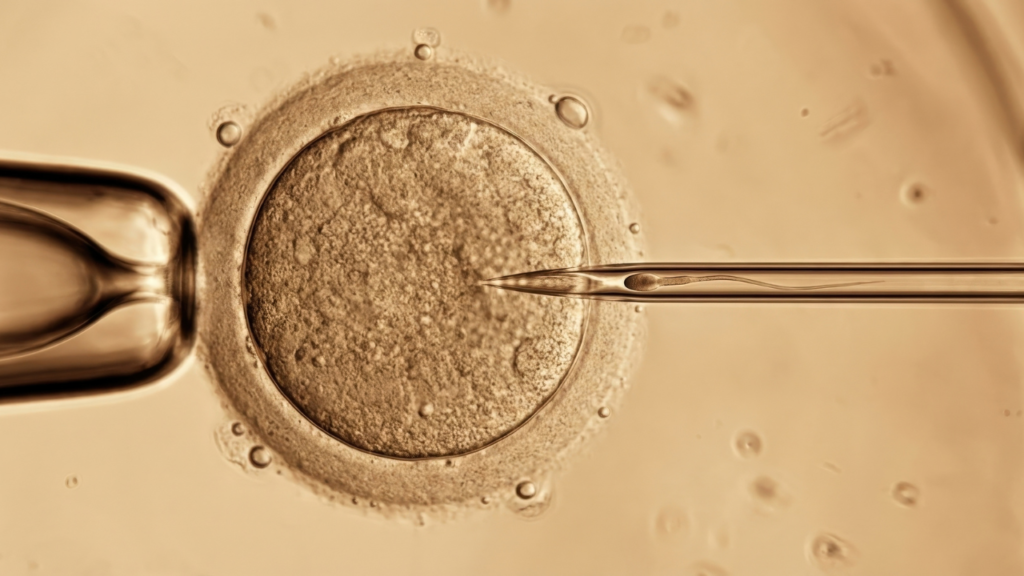
In December 2025, a large systematic review and meta-analysis published in Medicine evaluated acupuncture, electroacupuncture (EA), and moxibustion for recurrent implantation failure (RIF).
The analysis included 15 randomized controlled trials and 1,029 patients, making it one of the most comprehensive assessments of acupuncture for RIF to date.
Key findings
Compared with hormone therapy alone, acupuncture—particularly electroacupuncture (EA) combined with heat therapy (moxibustion)—was associated with:
• Higher clinical pregnancy rates
• Higher live birth rates
• Increased endometrial thickness
• Improved endometrial morphology
• Higher estradiol (E2) levels
These are not surrogate markers—they are outcomes that matter most to patients and clinicians alike.
Equally important was how acupuncture worked best.
Why Dosage, Timing, and Technique Matter
Subgroup analysis from the review revealed a clear pattern:
• Treatment over three full menstrual cycles produced better outcomes than shorter courses
• Electroacupuncture (EA), particularly when combined with warming techniques, showed stronger effects
• Individualized, cycle-specific treatment protocols outperformed one-size-fits-all approaches
In other words, acupuncture for implantation support is cumulative and dose-dependent. A single session around embryo transfer may be supportive—but for patients with repeated implantation failure, it may not be sufficient. In these cases, a higher cadence of acupuncture treatments over the ~100 days leading up to transfer is often necessary.
Read more: Why We Recommend 100 Days to Optimize Egg Quality at Acubalance
How Acupuncture Supports Implantation
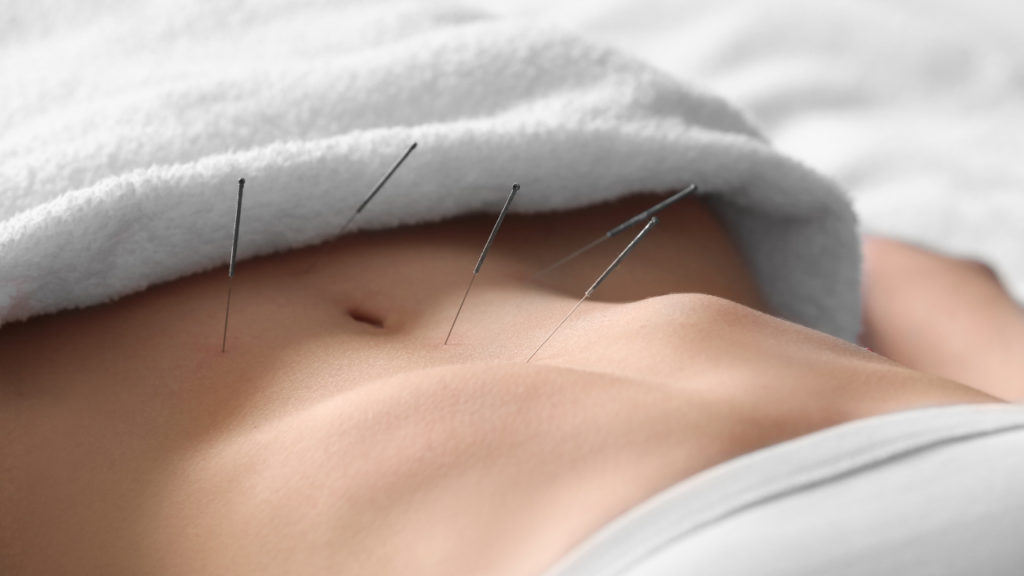
Acupuncture supports implantation by:
• Improving uterine blood flow and microcirculation
• Regulating the nervous system, reducing uterine stress responses
•. Supporting molecular signals involved in implantation, including hormone receptors and adhesion factors
Acupuncture—particularly when combined with electroacupuncture (EA), low-level laser therapy (LLLT), and nervous-system–calming sound therapy—offers a low-risk, evidence-supported strategy to support implantation.
This is why acupuncture can help even when embryos are genetically normal and transfers have already been optimized.
Read More: Nervous System Reset
The Role of Low-Level Laser Therapy (LLLT)
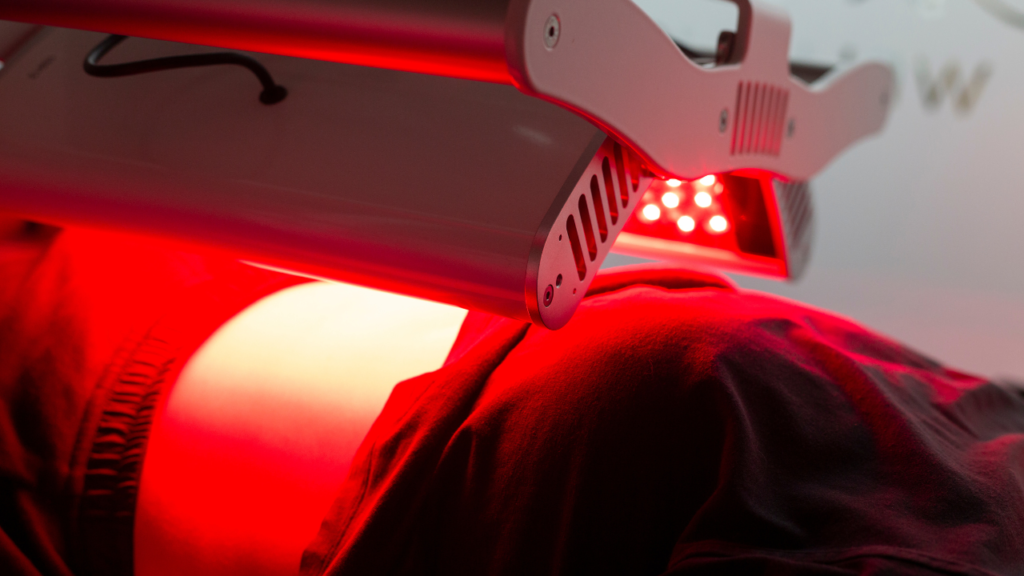
In addition to acupuncture, research supports the use of low-level laser therapy (photobiomodulation) as a pretreatment strategy for patients with recurrent implantation failure undergoing frozen embryo transfer.
A clinical study published in 2020 found that laser irradiation pretreatment before FET was associated with:
• Higher implantation rates
• Improved clinical pregnancy and live birth rates
•. Lower miscarriage rates
• No reported adverse effects
LLLT is believed to support implantation by improving endometrial microcirculation, enhancing cellular energy production, and stimulating growth factors and cytokines involved in endometrial receptivity. When combined with acupuncture and electroacupuncture, LLLT offers a complementary, non-invasive way to support the uterine environment in patients with repeated IVF or FET failure.
Read more: Preventing Another Failed FET: How Photobiomodulation Can Improve Your Chances of Success
Read more: Low Level Laser Therapy – LLLT Pretreatment: A Promising Solution for Frozen Embryo Transfers – FET in Recurrent Implantation Failure
Experience and Integration Matter
At Acubalance Wellness Centre, fertility care has been our primary clinical focus for over two decades. In 2002, we were the first clinic to introduce IVF acupuncture directly into major fertility clinics in Vancouver, helping pioneer an integrated model of care between Chinese medicine, naturopathic medicine, and assisted reproductive technology.
Beyond acupuncture, we were also early adopters and early developers of low-level laser therapy (photobiomodulation) for fertility in Canada, advancing comprehensive clinical protocols for patients trying to conceive naturally as well as those undergoing fresh IVF and frozen embryo transfer (FET) cycles.
Our clinical approach extends well beyond standard acupuncture alone. Rather than relying on a single mechanism or pathway, we intentionally layer therapies—including electroacupuncture using high-quality, medical-grade stimulation devices, low-level laser therapy, and nervous-system–calming vibroacoustic sound therapy—to support uterine receptivity from multiple angles.
By simultaneously addressing vascular flow, cellular energy and signaling, immune balance, inflammation, and nervous-system regulation, we create overlapping and complementary effects. This multi-pathway strategy allows each therapy to reinforce the others, producing a more robust—and often exponential—impact on endometrial receptivity, ensuring that no critical biological pathway is overlooked.
This depth of experience and layered integration is particularly important for patients navigating recurrent implantation failure, where subtle, interconnected physiological factors often determine success.
Acubalance provides on-site IVF acupuncture and laser acupuncture at Olive Fertility Centre in Vancouver, allowing patients to receive integrated care in coordination with their IVF and frozen embryo transfer (FET) cycles.
Contact us to arrange Acubalance on-site support acupuncture and laser acupuncture for your upcoming FET.
Read More: How to book your IVF acupuncture transfer day appointment in advance of your Olive transfer?
Bottom Line
• Recurrent implantation failure is often not an embryo problem
• Endometrial receptivity plays a central role in implantation success
• Acupuncture improves pregnancy and live birth rates when used appropriately
•. Electroacupuncture, treatment duration, and layered supportive therapies matter
• Addressing multiple biological pathways simultaneously is more effective than relying on a single intervention
When implantation continues to fail despite good embryos, the question is no longer whether the uterus needs support—it’s how intentionally and comprehensively that support is provided.
References
- Chen J, Lyu Y, Cheng X, Zhang F.
The impact of acupuncture and moxibustion treatment in individuals with recurrent implantation failures: A systematic review and meta-analysis.
Medicine. December 19, 2025;104(51):e46587.
doi:10.1097/MD.0000000000046587 - Cha J, Sun X, Dey SK.
Mechanisms of implantation: strategies for successful pregnancy.
Nature Medicine. 2012;18(12):1754–1767.
Open access: https://pmc.ncbi.nlm.nih.gov/articles/PMC3544955/ - Brosens JJ, Macklon NS.
The impact of uterine receptivity on embryo implantation.
Reproductive Biomedicine Online. 2017.
Open access: https://pmc.ncbi.nlm.nih.gov/articles/PMC9849692/ - Laser irradiation pretreatment improves endometrial preparation of frozen-thawed embryo transfer in recurrent implantation failure patients.
Lasers in Medical Science. 2020.